Today's
EarthStation1.com 15% (Or More!) Off Commemorative Memorial Title:
Race Cartoons Film Collection DVD, Video Download, USB Flash Drive
Today, August 4, 2026
August 4: National Chocolate Chip Cookie
Day: -- An annual opportunity to dunk America's #1 favorite
cookie! Whether yours are homemade or storebought, pour a glass of
milk and enjoy. Without chocolate chips, the cookie would still be
number one. Or would it? For that reason, we also recognize Ruth
Graves Wakefield on National Chocolate Chip Cookie Day. Thanks to
her inventiveness and curiosity, chocolate chips and a cookie
dough go together. And for this reason, we hover around ovens
savoring the moment the timer dings. Imagine if Ruth Graves
Wakefield hadn't run out of baker's chocolate for her cookie
recipe that day in 1937. Because that's what happened. The cookie
recipe she was preparing called for baker's chocolate and would
have blended smoothly into the dough. However, she was out. And
what if Mrs. Wakefield hadn't considered using semi-sweet
chocolate instead? She figured it would just melt into the dough
and work much like the baker's chocolate. Or, what if someone had
interrupted Ruth Graves Wakefield that day and caused the cookies
to burn and ruin the experiment? Well, none of that happened.
Instead of interruptions or doubts, the baker added the chocolate
to the dough. Moments later the mouthwatering aroma began to waft
from Mrs. Wakefield's oven. Perhaps the smell lured a child into
the kitchen. Or maybe a guest at the Tollhouse Inn she and her
husband owned. We may not know the finer details of the day the
chocolate chip cookie came to be. However, we do know Ruth Graves
Wakefield made it happen. We could even go so far as to say she is
responsible for all those other nuggets of goodness. Those morsels
of butterscotch, peanut butter, and white chocolate we enjoy in
much the same way we enjoy our chocolate delights. Nothing,
though, rates quite as high as the chocolate chip cookie Ruth
Graves Wakefield brought to us in 1937! On Sale Until Midnight
Tonight PT!
https://store.earthstation1.com/race-cartoons-dvd-dual-layer-all-regions.html
Today's
EarthStation1.com 15% (Or More!) Off Commemorative Memorial Title:
Escape! Radio Adventure Series MP3 Set DVD, Download, USB Drive
Today, August 4, 2026
August 4: National White Wine Day: -- The
perfect opportunity to enjoy a glass of this very versatile drink.
White wines make for great aperitifs before a meal, a suitable
companion to fish or white meat dishes, and a great accompaniment
to dessert. White wine is generally considered to be lighter and
more refreshing than red wine and is the preferred alcoholic
beverage for millions of people throughout the world. So, whether
it is a chardonnay or a sauvignon blanc, National White Wine Day
is here and it's time to relax and treat yourself to a crisp
little tipple. The origins of wine can be traced back as far as
7500 years ago, in what is now known as Iran. Experts are pretty
sure that wine was being drunk long before this but there's no
actual evidence for them to point towards at the moment. By 460 BC
it was being consumed in Europe and the Greek physician
Hippocrates was prescribing it as a remedy to some of his
patients. During the Roman times, wine featured heavily at
expensive banquets and was considered a sign of prestige. It was
the Romans who began to produce less sweet versions of white wine
as they conquered new territories in the North and cultivated on
new land. It was also the Romans who introduced the concept of
drinking cool wine in the summer and warm wine in the winter, a
practice which many still follow today. White wine eventually
became popular throughout all of Europe, which led to more
vineyards throughout the continent. By the 16th century, that
popularity had spread to the Americas, with vines being planted in
Mexico, Peru, Bolivia, Argentina, and Chile. Champagne was created
in the 18th century and by the 19th century, it was the drink of
choice for the elite. Champagne is only produced in the Champagne
province of France, an area that has unique soil due to its
sloping landscapes. The 20th century has seen vines introduced to
new places and technological developments that have changed the
process of winemaking throughout the world. One thing, though,
hasn't changed, and that's the people's love for a glass of white
wine. The origins of National White Wine Day are unclear but we do
know the best way to celebrate, and that's with a glass of the
good stuff. On Sale Until Midnight Tonight PT!
https://store.earthstation1.com/escape-mp3-dvd-complete-radio-adventure-series-broadcast3.html
Today's
EarthStation1.com 15% (Or More!) Off Commemorative Memorial Title:
Old Time Kids Films Youth Social Guidance Films Set DVD, MP4, USB
Today, August 4, 2026
August 4: Hooray For Kids Day: -- Kids
and their unique perspectives of life are the center focus today.
The founders of this day, who remain unknown, likely wanted
everyone - adults included - to share in the joy, innocence, and
love children bring into the world. They're unafraid, don't know
how to hate, find joy in the little things, and display curiosity
that can rival a cat's - which is why this day encourages everyone
to say a loud 'hurray!' for every kid in your life and the world.
Children have been revered and even worshiped throughout history,
but did you know that kids were once - legally - thought of as
mini-adults? The notion that children could have a separate
identity or be deserving of a special set of rights was
nonexistent in Medieval Europe and other parts of the world. While
babies were cherished, common law dictated that for the most part,
they are to be treated as adults. This image changed by the 1600s
with the rise of the middle class. This new family unit grew all
over the world, especially in countries like Holland and England,
and with it, a new notion of 'childhood.' Not only were children's
rights a hot topic in this period, but people also developed new
theories about child-rearing. Of particular importance was John
Locke's "An Essay Concerning Human Understanding," which
described children's minds as 'blank slates' that are then filled
in by the different sensory experiences children begin to have as
soon as they are born. Seventeenth-century books and thinkers took
a more romantic approach to childhood, believing it to be a brief
period of relative safety and calmness before the hardships of
adulthood. In this century and the next, Locke's theories gained
more ground and favor among thinkers and educationists. Multiple
children's textbooks were developed based on his theories - which
meant they contained child-appropriate text and images, and were
easier to understand - and many games, novellas, stories, and
poems were aimed especially at this young audience. However, the
growing industrialization and population growth pushed a lot of
people into poverty, which meant more and more kids in the
workplace. Child labor was common even before these times, but
children in factories and mines were exposed to dangerous working
conditions and exploitative practices. The contradiction between
child labor conditions and the image of childhood as portrayed by
many major educationists clashed, and this led to the first fights
for the legal protection of children. Children were gradually
required to compulsorily attend school, effectively removing them
from the workplace. Dolls, action figures, and other kids' toys
were now mass-produced, further imprinting childhood as a fun and
playful time for kids. The modern concept of children and
childhood was adopted by countries worldwide as they modernized.
Today, children are seen for what they are - beautiful, innocent
souls filled with joy, laughter, and a little bit of mischief. On
Sale Until Midnight Tonight PT!
https://store.earthstation1.com/old-time-kids-films-youth-social-guidance-films-dual-layer-dvd.html
Today's
EarthStation1.com 15% (Or More!) Off Commemorative Memorial Title:
WWII Films: Combat Bulletins And Official War Films DVD, Download,
USB
Today, August 4, 2026
August 4, 1790: National Coast Guard Day
(U.S. Coast Guard Birthday): -- The United States Revenue Cutter
Service, the oldest continuous seagoing service of the United
States, is founded by the U.S. Congress as the Revenue-Marine at
the request of Secretary of the Treasury Alexander Hamilton to
serve as an armed customs enforcement service and for collecting
customs duties at U.S. seaports. As time passed, the service
gradually gained missions either voluntarily or by legislation,
including those of a military nature. By the 1860s, the service
was known as the U.S. Revenue Cutter Service and the term
Revenue-Marine gradually fell into disuse. It was generally
referred to as the Revenue-Marine until July 31, 1894, when it was
officially renamed the Revenue Cutter Service. The Revenue Cutter
Service operated under the authority of the U.S. Department of the
Treasury. On January 28, 1915, an act of the U.S. Congress merged
the U.S. Revenue Cutter Service with the U.S. Life-Saving Service,
also under the authority of the Treasury Department, to create the
United States Coast Guard as a separate and individual branch of
the United States Armed Forces. The United States Coast Guard
(USCG) is the maritime security, search and rescue, and law
enforcement service branch of the United States Armed Forces and
one of the country's eight uniformed services. The Coast Guard is
a maritime, military, multi-mission service unique among the U.S.
military branches for having a maritime law enforcement mission
with jurisdiction in both domestic and international waters and a
federal regulatory agency mission as part of its duties. It
operates under the U.S. Department of Homeland Security during
peacetime, and can be transferred to the U.S. Department of the
Navy under the Department of Defense by the U.S. President at any
time, or by the U.S. Congress during times of war. Prior to its
transfer to Homeland Security, it operated under the Department of
Transportation from 1967 to 2003 and the Department of the
Treasury from its inception until 1967. A congressional authority
transfer has only happened once: in 1917, during World War I. When
the U.S. entered World War II in December 1941, the Coast Guard
had already been transferred by Franklin Roosevelt in November.
Created by the U.S. Congress on 4 August 1790 at the request of
Alexander Hamilton as the Revenue-Marine, it is the oldest
continuous seagoing service of the United States. As Secretary of
the Treasury, Hamilton headed the Revenue-Marine, whose original
purpose was collecting customs duties at U.S. seaports. By the
1860s, the service was known as the U.S. Revenue Cutter Service
and the term Revenue-Marine gradually fell into disuse. The modern
Coast Guard was formed by a merger of the U.S. Revenue Cutter
Service and the U.S. Life-Saving Service on 28 January 1915, under
the U.S. Department of the Treasury. In 1939, the U.S. Lighthouse
Service was also merged into the Coast Guard. As one of the
country's six armed services, the Coast Guard has been involved in
every major U.S. war since 1790, from the Quasi-War with France to
the Global War on Terrorism. As of 2018, the Coast Guard had
40,992 active duty personnel, 7,000 reservists, 8,577 full-time
civilian employees, and 31,000 auxiliary members for a total
workforce of 87,569. The Coast Guard maintains an extensive fleet
of 243 coastal and ocean-going patrol ships, tenders, tugs,
icebreakers, and 1,650 smaller boats, as well as an aviation
division consisting of 201 helicopters and fixed-wing aircraft.
While the U.S. Coast Guard is the second smallest of the U.S.
military service branches in terms of membership, the U.S. Coast
Guard by itself was the world's 12th largest naval force in 2018.
On Sale Until Midnight Tonight PT!
https://store.earthstation1.com/wwii-films-combat-bulletins-and-official-war-films-4-dvd4.html
Today's
EarthStation1.com 15% (Or More!) Off Commemorative Memorial Title:
Satchmo In New Orleans Louis Armstrong + Bonus Title DVD MP4 USB
Drive
Today, August 4, 2026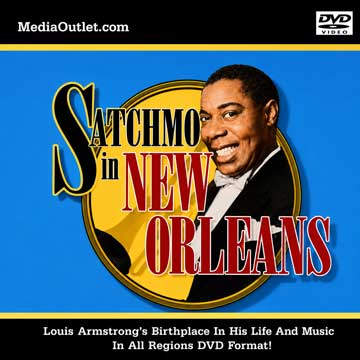
August 4, 1901 (Documented): #BOTD: #HBD!
Louis Armstrong, nicknamed "Satchmo", "Satch",
and "Pops", African American jazz trumpeter and
cornetist, composer, singer and occasional actor, one of the most
influential figures in American music, popular music and jazz
whose career spanned five decades, from the 1920s to the 1960s,
and different eras in music (d. July 6, 1971) is #born Louis
Daniel Armstrong New Orleans; Armstrong often stated that he was
born on July 4, 1900, a date that has been noted in many
biographies. Although he died in 1971, it was not until the
mid-1980s that his true birth date, August 4, 1901, was discovered
by the music historian and researcher Tad Jones through the
examination of baptismal records while researching an unpublished
biography of Louis Armstrong's early life. His first name is
pronouced "LOO-is", not "LOO-ee"; as he sings
in the song "Helly, Dolly", "This is LOO-is,
Dolly". Coming to prominence in the 1920s as an "inventive"
trumpet and cornet player, Armstrong was a foundational influence
in jazz, shifting the focus of the music from collective
improvisation to solo performance. With his instantly recognizable
gravelly voice, Armstrong was also an influential singer,
demonstrating great dexterity as an improviser, bending the lyrics
and melody of a song for expressive purposes. He was also
originated scat singing on the Hot Five recording "Heebie
Jeebies" in 1926. Louis Armstrong died of a heart attack in
his sleep at his home in Corona, Queens, New York City on July 6,
1971, a month before his 70th birthday. He is interred in Flushing
Cemetery, Flushing, in Queens, New York City. His honorary
pallbearers included Bing Crosby, Ella Fitzgerald, Dizzy
Gillespie, Pearl Bailey, Count Basie, Harry James, Frank Sinatra,
Ed Sullivan, Earl Wilson, Alan King, Johnny Carson and David
Frost. Peggy Lee sang The Lord's Prayer at the services while Al
Hibbler sang "Nobody Knows the Trouble I've Seen" and
Fred Robbins, a long-time friend, gave the eulogy. Duke Ellington,
quoted in DownBeat magazine in 1971, said, "If anybody was a
master, it was Louis Armstrong. He was and will continue to be the
embodiment of jazz." In 1950, Bing Crosby, the most
successful vocalist of the first half of the 20th century, said,
"He is the beginning and the end of music in America."
On Sale Until Midnight Tonight PT!
https://store.earthstation1.com/satchmo-in-new-orleans-dvd-louis-armstrong-documentary.html
Today's
EarthStation1.com 15% (Or More!) Off Commemorative Memorial Title:
TV Commercials: The Classics Vol. 9 DVD, MP4 Download, USB Flash
Drive
Today, August 4, 2026
August 4, 1693: Date traditionally
ascribed to Dom Perignon's invention of champagne; it is not clear
whether he actually invented champagne, however he has been
credited as an innovator who developed the techniques used to
perfect sparkling wine. Dom Pierre Perignon, O.S.B. (December 1638
- September 14, 1715) was a French Benedictine monk who made
important contributions to the production and quality of champagne
wine in an era when the region's wines were predominantly still
red. By the mid-19th century, sparkling champagne became the
dominant style of Champagne until the mid-19th century. The famous
champagne Dom Perignon, the prestige cuvee of Moet & Chandon,
is named for him. The remains of the monastery where he spent his
adult life is now the property of that winery. Dom Perignon was a
contemporary of Louis XIV (1638-1715). Champagne is a French
sparkling wine. Many people use the term Champagne as a generic
term for sparkling wine, but in the EU and some countries, it is
illegal to label any product Champagne unless it came from the
Champagne wine region of France and is produced under the rules of
the appellation. This alcoholic drink is produced from specific
types of grapes grown in the Champagne region following rules that
demand, among other things, specific vineyard practices, sourcing
of grapes exclusively from designated places within the Champagne
region, specific grape-pressing methods and secondary fermentation
of the wine in the bottle to cause carbonation. Sparkling wine is
a wine with significant levels of carbon dioxide in it, making it
fizzy. While the phrase commonly refers to champagne, EU countries
legally reserve that term for products exclusively produced in the
Champagne region of France. Sparkling wine is usually either white
or rose, but there are examples of red sparkling wines such as the
Italian Brachetto, Bonarda and Lambrusco, Australian sparkling
Shiraz, and Azerbaijani "Pearl of Azerbaijan" made from
Madrasa grapes. The sweetness of sparkling wine can range from
very dry brut styles to sweeter doux varieties (French for 'hard'
and 'soft', respectively). On Sale Until Midnight Tonight PT!
https://store.earthstation1.com/tv-commercials-the-classics-vol-9-dv9.html
Today's
EarthStation1.com 15% (Or More!) Off Commemorative Memorial Title:
The Temple In Jerusalem & The Ark Of The Covenant MP4 Download
DVD
Today, August 4, 2026
August 4, 70 CE: Jerusalem: The History Of Jerusalem: Religion: The History Of Religion: Abrahamic Religions: Judaism: The History Of Judaism: The History Of Israel: Judaea: The History Of Judaea: The Jewish-Roman Wars: The First Jewish-Roman War (The Great Jewish Revolt (Hebrew: Ha-Mered Ha-Gadol), The Jewish War): Sieges Of Jerusalem: The Siege Of Jerusalem (70 CE) (Sieges Of Jerusalem: The Siege Of Jerusalem): -- The Second Temple, later known as Herod's Temple, the reconstructed Temple in Jerusalem between c. 516 BCE and 70 CE, begins to be destroyed by Roman legions under Titus, son of the Roman Emperor Vespasian, who retook and destroyed much of Jerusalem and the Second Temple on the 9th day of the Hebrew calendar month of Av, the day on which Tisha B'Av is observed, an annual fast day in Judaism on which a number of disasters in Jewish history occurred, primarily the destruction of both Solomon's Temple by the Neo-Babylonian Empire and the Second Temple by the Roman Empire in Jerusalem. By August 29, the destruction of the temple would be completed, and by September 8, the city would be fully conquered. On July 20, AD 70, Titus and his legions stormed the Fortress Of Antonia, a citadel built by Herod the Great and named for Herod's patron Mark Antony as a fortress whose chief function was to protect the Second Temple, the eastern end of the so-called Second Wall at the north-western corner of the Temple Mount; in response, the Zealots draw the Roman army into street fights. Titus began his siege a few days before Passover, on 14 Xanthicus (April), surrounding the city with three legions (V Macedonica, XII Fulminata, XV Apollinaris) on the western side and a fourth (X Fretensis) on the Mount of Olives, to the east. If the reference in his Jewish War at 6:421 is to Titus's siege, though difficulties exist with its interpretation, then at the time, according to Josephus, Jerusalem was thronged with many people who had come to celebrate Passover. The thrust of the siege began in the west at the Third Wall, north of the Jaffa Gate. By May, this was breached and the Second Wall also was taken shortly afterwards, leaving the defenders in possession of the Temple and the upper and lower city. The Jewish defenders were split into factions. Simon Bar Giora and John of Giscala, the two prominent Zealot leaders, placed all blame for the failure of the revolt on the shoulders of the moderate leadership. John of Gischala's group murdered another faction leader, Eleazar ben Simon, whose men were entrenched in the forecourts of the Temple. The Zealots resolved to prevent the city from falling into Roman hands by all means necessary, including the murder of political opponents and anyone standing in their way. There were still those wishing to negotiate with the Romans and bring a peaceful end to the siege. The most prominent of these was Yohanan ben Zakkai, whose students smuggled him out of the city in a coffin in order to deal with Vespasian. This, however, was insufficient to deal with the madness that had now gripped the Zealot leadership in Jerusalem and the reign of terror it unleashed upon the population of the city. Josephus describes various acts of savagery committed against the people by its own leadership, including the torching of the city's food supply in an apparent bid to force the defenders to fight for their lives. The enmities between John of Gischala and Simon bar Giora were papered over only when the Roman siege engineers began to erect ramparts. Titus then had a wall built to girdle the city in order to starve out the population more effectively. After several failed attempts to breach or scale the walls of the Fortress of Antonia, the Romans finally launched a secret attack. Despite early successes in repelling the Roman sieges, the Zealots fought amongst themselves, and they lacked proper leadership, resulting in poor discipline, training, and preparation for the battles that were to follow. At one point they destroyed the food stocks in the city, a drastic measure thought to have been undertaken perhaps in order to enlist a merciful God's intervention on behalf of the besieged Jews, or as a stratagem to make the defenders more desperate, supposing that was necessary in order to repel the Roman army. According to Josephus, when the Romans reached Antonia they tried to destroy the wall which protected it. They removed four stones only, but during the night the wall collapsed. "That night the wall was so shaken by the battering rams in that place where John had used his stratagem before, and had undermined their banks, that the ground then gave way, and the wall fell down suddenly." Following this, Titus had raised banks beside the court of the Temple: on the north-west corner, on the north side, and on the west side. Josephus goes on to say that the Jews then attacked the Romans on the east, near the Mount of Olives, but Titus drove them back to the valley. Zealots set the north-west colonnade on fire. The Romans set the next one on fire, and the Jews wanted it to burn, and they also trapped some Roman soldiers when they wanted to climb over the wall. They had burned wood under the wall when Romans were trapped on it. After Jewish allies killed a number of Roman soldiers, Josephus claims that Titus sent him to negotiate with the defenders; this ended with Jews wounding the negotiator Josephus with an arrow, and another sally was launched shortly after. Titus was almost captured during this sudden attack, but escaped. Overlooking the Temple compound, the fortress provided a perfect point from which to attack the Temple itself. Battering rams made little progress, but the fighting itself eventually set the walls on fire. The Siege Of Jerusalem in the year 70 CE was the decisive event of the First Jewish-Roman War. The Roman army, led by the future Emperor Titus, with Tiberius Julius Alexander as his second-in-command, besieged and conquered the city of Jerusalem, which had been controlled by Judean rebel factions since 66 CE, following the Jerusalem riots of 66, when the Judean Free Government was formed in Jerusalem. The siege ended on August 30, 70 CE with the final burning and destruction of what whas left of the Second Temple, and the Romans entered and sacked the Lower City. The destruction of both the first and second temples is still mourned annually as the Jewish fast Tisha B'Av. The Arch of Titus, celebrating the Roman sack of Jerusalem and the Temple, still stands in Rome. The conquest of the city was complete on September 8, 70 CE. On Sale Until Midnight Tonight PT! https://store.earthstation1.com/teinjearkofc.html
Today's
EarthStation1.com 15% (Or More!) Off Commemorative Memorial Title:
World War I: The War Years Documentary Series DVD, Download, USB
Drive
Today, August 4, 2026
August 4, 1914: Causes Of The European
Civil War (Events Leading To The European Civil War): Causes Of
World War I (Events Leading To World War I): The Guns Of August:
The July Crisis: The German Invasion Of Belgium (1914): -- The
German Empire begins the German Invasion Of Belgium as the German
1st, 2nd and 3rd armies moved into positions in Belgium from which
they could conduct a military campaign to invade France. In
response, Belgium and the British Empire declare war on Germany,
and the United States declares its neutrality. Earlier, on July
24, the Belgian government had announced that if war came it would
uphold its historic neutrality. The Belgian government mobilised
its armed forces on July 31 and a state of heightened alert
(Kriegsgefahr) was proclaimed in Germany. On August 2, the German
government sent an ultimatum to Belgium, demanding passage through
the country and German forces invaded Luxembourg. Two days later,
the Belgian Government refused the demands and the British
Government guaranteed military support to Belgium. The German
government declared war on Belgium on August 4, troops crossed the
border, and the next day began the Battle Of Liege, the opening
engagement of the German Invasion Of Belgium and the first battle
of the First World War. The day prior, on August 3, 1914, Germany
declared war against France, while Romania declared its
neutrality. Following on the July 28, 1914 declaration of war by
Austria-Hungary on Serbia, Austria-Hungary's ally, the German
Empire, declared war on the Russian Empire on August 1, 1914,
deepening the opening of World War I. The assassination of
Austrian Archduke Ferdinand on June 28, 1914 led to a month of
diplomatic manoeuvring between Austria-Hungary, Germany, Russia,
France and Britain, called the July Crisis. Austria-Hungary
correctly believed that Serbian officials (especially the officers
of the Black Hand) were involved in the plot to murder the
Archduke, and wanted to finally end Serbian interference in
Bosnia. On July 23, Austria-Hungary delivered to Serbia the July
Ultimatum, a series of ten demands that were made intentionally
unacceptable, in an effort to provoke a war with Serbia. Serbia
decreed general mobilisation on the 25th. Serbia accepted all of
the terms of the ultimatum except for article six, which demanded
that Austrian delegates be allowed in Serbia for the purpose of
participation in the investigation into the assassination.
Following this, Austria broke off diplomatic relations with Serbia
and, the next day, ordered a partial mobilisation. Finally, on
July 28, 1914, Austria-Hungary declared war on Serbia. On July 29,
Russia, in support of Serbia, declared partial mobilisation
against Austria-Hungary. On the 30th, Russia ordered general
mobilisation. German Chancellor Bethmann-Hollweg waited until the
31st for an appropriate response, when Germany declared a "state
of danger of war". Kaiser Wilhelm II asked his cousin, Tsar
Nicolas II, to suspend the Russian general mobilisation. When he
refused, Germany issued an ultimatum demanding its mobilisation be
stopped, and a commitment not to support Serbia. Another was sent
to France, asking her not to support Russia if it were to come to
the defence of Serbia. On August 1, after the Russian response,
Germany mobilised and declared war on Russia. This also led to the
general mobilisation in Austria-Hungary on August 4. The German
government issued demands to France that it remain neutral as they
had to decide which deployment plan to implement, it being
difficult if not impossible to change the deployment whilst it was
underway. The modified German Schlieffen Plan, Aufmarsch II West,
would deploy 80% of the army in the west, and Aufmarsch I Ost and
Aufmarsch II Ost would deploy 60% in the west and 40% in the east
as this was the maximum that the East Prussian railway
infrastructure could carry. The French did not respond, but sent a
mixed message by ordering their troops to withdraw 10 km (6 mi)
from the border to avoid any incidents, and at the same time
ordered the mobilisation of her reserves. Germany responded by
mobilising its own reserves and implementing Aufmarsch II West. On
August 1, Wilhelm ordered General Moltke to "march the whole
of the army to the East" after he had been wrongly informed
that the British would remain neutral as long as France was not
attacked. The General convinced the Kaiser that improvising the
redeployment of a million men was unthinkable and that making it
possible for the French to attack the Germans "in the rear"
might prove disastrous. Yet Wilhelm insisted that the German army
should not march into Luxembourg until he received a telegram sent
by his cousin George V, who made it clear that there had been a
misunderstanding. Eventually the Kaiser told Moltke, "Now you
can do what you want." Germany attacked Luxembourg on August
2, and on August 3 declared war on France. On August 4, after
Belgium refused to permit German troops to cross its borders into
France, Germany declared war on Belgium as well. Britain declared
war on Germany at 19:00 UTC on August 4, 1914 (effective from 11
pm), following an "unsatisfactory reply" to the British
ultimatum that Belgium must be kept neutral. On Sale Until
Midnight Tonight PT!
https://store.earthstation1.com/world-war-i-the-war-years-dvd-4-part-french-tv-serie4.html
Today's
EarthStation1.com 15% (Or More!) Off Commemorative Memorial Title:
Hearts & Minds 1974 Vietnam War Documentary Feature Film DVD,
MP4, USB
Today, August 4, 2026
August 4, 1964: The Aftermath Of World
War II: The Cold War: The Cold War In Asia: The Indochina Wars:
The Vietnam War (The Second Indochina War, The Vietnam Conflict,
The Resistance War Against America): The United States In The
Vietnam War: The Gulf of Tonkin Incidents (Vietnamese: Su Kien
Vinh Bac Bo): The Second Gulf Of Tonkin Incident: -- U.S.
destroyers USS Maddox and USS Turner Joy mistakenly report coming
under attack in the Gulf of Tonkin; how these reports were
interpreted and acted upon remains highly controversial. In the
2003 documentary The Fog of War, the former United States
Secretary Of Defense Robert S. McNamara admitted that the
so-called August 4 Gulf Of Tonkin attack never happened. In 1995,
McNamara met with former Vietnam People's Army General Vo Nguyen
Giap to ask what happened on August 4, 1964 in The Second Gulf Of
Tonkin Incident. "Absolutely nothing", Giap replied.
Giap claimed that the attack had been imaginary. On August 4,
another patrol off the North Vietnamese coast was launched by
Maddox and Turner Joy, to "show the flag" after the
first incident. This time their orders indicated that the ships
were to close to no less than 11 miles (18 km) from the coast of
North Vietnam. During an evening of rough weather and heavy seas,
the destroyers received radar, sonar, and radio signals that they
believed signaled another attack by the North Vietnamese navy. For
some two hours (from about 21:40 to about 23:35, local time) the
ships fired on radar targets and maneuvered vigorously amid
electronic and visual reports of enemies. Despite the Navy's claim
that two attacking torpedo boats had been sunk, there was no
wreckage, bodies of dead North Vietnamese sailors, or other
physical evidence present at the scene of the alleged engagement.
At 01:27 local time (13:27 Washington time), Captain John Herrick,
commander of the USS Maddox, sent a cable in which he acknowledged
that the second attack may not have happened and that there may
actually have been no Vietnamese craft in the area: "Review
of action makes many reported contacts and torpedoes fired appear
doubtful. Freak weather effects on radar and overeager sonarmen
may have accounted for many reports. No actual visual sightings by
Maddox. Suggest complete evaluation before any further action
taken." In 1996 Defense Secretary Robert McNamara said "...
And ultimately it was concluded that almost certainly the [August
4] attack had occurred. But even at the time there was some
recognition of a margin of error, so we thought it highly probable
but not entirely certain. And because it was highly probable --
and because even if it hadn't occurred, there was strong feeling
we should have responded to the first attack, which we were
positive had occurred -- President Johnson decided to respond to
the second [attack]. I think it is now clear [the second attack]
did not occur..." One hour later, Herrick sent another cable,
stating, "Entire action leaves many doubts except for
apparent ambush at beginning. Suggest thorough reconnaissance in
daylight by aircraft." In response to requests for
confirmation, at around 16:00 Washington time, Herrick cabled,
"Details of action present a confusing picture although
certain that the original ambush was bona fide." It is likely
that McNamara did not inform either the president or Admiral U. S.
Grant Sharp Jr. about Herrick's misgivings or Herrick's
recommendation for further investigation. At 18:00 Washington time
(05:00 in the Gulf of Tonkin), Herrick cabled yet again, this time
stating, "the first boat to close the Maddox probably
launched a torpedo at the Maddox which was heard but not seen. All
subsequent Maddox torpedo reports are doubtful in that it is
suspected that sonarman was hearing the ship's own propeller
beat". In the face of growing uncertainties over the course
of the day regarding whether the attack had occurred, the Johnson
administration ended up basing its conclusion mostly on
communications intercepts erroneously assessed to be North
Vietnamese preparations to carry out an attack and a North
Vietnamese after action report. Later analysis showed those
communications to have concerned the recovery of torpedo boats
damaged in the August 2 attack and North Vietnamese observations
of (but not participation in) the August 4 U.S. actions. The Gulf
Of Tonkin Incidents were an international confrontation that led
to the United States engaging more directly in the Vietnam War. It
involved separate confrontations involving North Vietnam and the
United States in the waters of the Gulf Of Tonkin. The original
American report blamed North Vietnam for both incidents, but
eventually became very controversial with widespread belief that
at least one, and possibly both incidents were false, and possibly
deliberately so. On August 2, 1964, the destroyer USS Maddox,
while performing a signals intelligence patrol as part of DESOTO
operations, was pursued by three North Vietnamese Navy torpedo
boats of the 135th Torpedo Squadron. Maddox fired three warning
shots and the North Vietnamese boats then attacked with torpedoes
and machine gun fire. Maddox expended over 280 3-inch (75 mm) and
5-inch (130 mm) shells in a sea battle. One U.S. aircraft was
damaged, three North Vietnamese torpedo boats were damaged, and
four North Vietnamese sailors were killed, with six more wounded.
There were no U.S. casualties. Maddox "was unscathed except
for a single bullet hole from a Vietnamese machine gun round."
The outcome of these two incidents was the passage by Congress of
the Gulf Of Tonkin Resolution, which granted President Lyndon B.
Johnson the authority to assist any Southeast Asian country whose
government was considered to be jeopardized by "communist
aggression". The resolution served as Johnson's legal
justification for deploying U.S. conventional forces and the
commencement of open warfare against North Vietnam. In 2005, an
internal National Security Agency historical study was
declassified; it concluded that Maddox had engaged the North
Vietnamese Navy on August 2, but that there were no North
Vietnamese naval vessels present during the incident of August 4.
The report stated, regarding the first incident on August 2: "at
1500G, Captain Herrick ordered Ogier's gun crews to open fire if
the boats approached within ten thousand yards (9,150 m). At about
1505G, Maddox fired three rounds to warn off the communist boats.
This initial action was never reported by the Johnson
administration, which insisted that the Vietnamese boats fired
first." On Sale Until Midnight Tonight PT!
https://store.earthstation1.com/hearts-and-minds-dvd-1974-vietnam-war-documentary-m1974.html
Today's
EarthStation1.com 15% (Or More!) Off Commemorative Memorial Title:
WWII Films: The Asia-Pacific War DVD, Video Download, USB Flash
Drive
Today, August 4, 2026
August 4-5, 1943: World War II: The
Pacific War (The Asia-Pacific War, The Pacific Theater Of World
War II): The Pacific Ocean Theater Of World War II: Operation
Cartwheel: The Solomon Islands Campaign: The New Georgia Campaign
(The New Georgia Islands Campaign): The Battle of Munda Point: --
Munda is captured from the Japanese, bringing an end to The Battle
Of Munda Point, a battle that began on July 22, 1943 and was
fought between primarily United States Army and Imperial Japanese
Army forces. The battle took place following a landing by U.S.
troops on the western coast of New Georgia from Rendova, as part
of an effort to capture the Japanese airfield that had been
constructed at Munda Point. This advance had become bogged down
and while the Allies brought forward reinforcements and supplies,
the Japanese had launched a counterattack on July 17-18 . This
effort was ultimately unsuccessful and afterwards U.S. forces
launched a corps-level assault to reinvigorate their effort to
capture the airfield. Against this drive, Japanese defenders from
three infantry regiments offered stubborn resistance, but were
ultimately forced to withdraw, allowing U.S. forces to capture the
airfield on August 5. The airfield later played an important role
in supporting the Allied campaign on Bougainville in late 1943.
The airstrip on Munda had been a Japanese base that had been used
to attack American forces during the Battle Of Guadalcanal, and
was the main objective of the assault on the island, which had
been occupied by the Empire Of Japan since the early stages of the
war. The Japanese built the airstrip, on the site of today's Munda
Airport, to support their forces fighting the Battle Of
Guadalcanal. A Japanese convoy put into Munda Point on November
24, 1942, and started construction under careful concealment from
the air by means of rows of coconut palms suspended by cable. The
airstrip was discovered by American planes on December 3, and the
first airstrikes were delivered by B-17 Flying Fortress bombers on
December 9. However, the Japanese were able to continue to use
Munda, despite regular bombardment from both air and sea, and the
Allies launched Operation Cartwheel in order to drive the Japanese
out of the Solomons and ultimately eliminate the large Japanese
base at Rabaul. The New Georgia Campaign was launched with
landings on New Georgia and nearby islands on June 30, 1943, when
mainly American but also Pacific Islander troops conducted the
Landings On Rendova and several other amphibious operations
throughout the New Georgia Group. The Allied forces spent July
1943 conducting the Drive On Munda Point, shelling and bombing
Japanese forces in and around Munda Airfield, fighting off a large
Japanese counterattack, and eventually closing in on Munda
overland, capturing it on August 4-5 during the Battle Of Munda
Point. The heavy fighting left thousands dead on both sides and
many more wounded. New Georgia was secured by American forces on
August 23, after weeks of difficult and bloody fighting that
continued on some nearby islands until October 1943. Donald
Gilbert Kennedy was a Coastwatcher stationed at Seghe (Segi) on
New Georgia during the Solomon Islands Campaign. For his services
as a Coastwatcher, he was awarded the Distinguished Service Order
(DSO) (UK), and the Navy Cross (U.S.). Since 1978, the island has
been part of the independent state of Solomon Islands. On Sale
Until Midnight Tonight PT!
https://store.earthstation1.com/wwii-films-the-asiapacific-conflict-dvd.html
Today's
EarthStation1.com 15% (Or More!) Off Commemorative Memorial Title:
Jack Benny Presents Golden Memories Of Radio LPs CD, MP3 Download,
USB
Today, August 4, 2026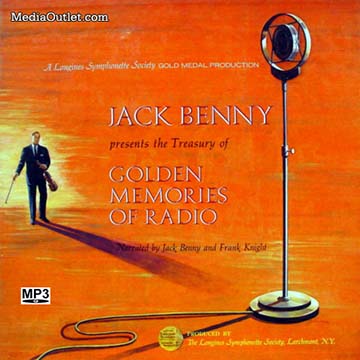
August 4, 1936: The Olympic Games (The
Olympics): The 1936 Summer Olympics: (German: Olympische
Sommerspiele 1936)) (The Games Of The XI Olympiad (German: Spiele
Der XI. Olympiade), Berlin 1936): -- Jesse Owens wins his second
of four Olympic Gold Medals at the Berlin Olympic Games for
placing first in the long jump with a leap of 8.06 metres (26 ft 5
in) (3_ inches short of his own world record). Owens participation
in the 1936 Berlin Olympic Games was controversial on a number of
accounts. On December 4, 1935, NAACP Secretary Walter Francis
White wrote a letter to Owens about the matter, but never sent it.
In it, he tryied to dissuade Owens from taking part in the
Olympics in Nazi Germany, arguing that an African American should
not promote a racist regime after what his race had suffered at
the hands of white racists in his own country. In the months prior
to the Games, a movement gained momentum in favor of a boycott.
Owens was convinced by the NAACP to declare: "If there are
minorities in Germany who are being discriminated against, the
United States should withdraw from the 1936 Olympics". Yet he
and others eventually took part after Avery Brundage, president of
the American Olympic Committee branded them "un-American
agitators". In 1936, Owens and his United States teammates
sailed to the games on the SS Manhattan. Owens arrived at the new
Olympic stadium to a throng of fans, many of them young girls
yelling "Wo ist Jesse? Wo ist Jesse?" ("Where is
Jesse? Where is Jesse?"). Just before the competitions,
founder of Adidas athletic shoe company Adi Dassler visited Owens
in the Olympic village and persuaded Owens to wear Gebruder
Dassler Schuhfabrik shoes; this was the first sponsorship for a
male African American athlete. Hitler was subsequently accused of
failing to acknowledge Owens (who won gold medals on August 3, 4
(two), and 9) or shake his hand. Owens responded to these claims
at the time: "Hitler had a certain time to come to the
stadium and a certain time to leave. It happened he had to leave
before the victory ceremony after the 100 meters [race began at
5:45 p.m.. But before he left I was on my way to a broadcast and
passed near his box. He waved at me and I waved back. I think it
was bad taste to criticize the "man of the hour" in
another country." In an article dated August 4, 1936, the
African American newspaper editor Robert L. Vann describes
witnessing Hitler "salute" Owens for having won gold in
the 100m sprint of August 3: "And then;_ wonder of wonders;_
I saw Herr Adolph Hitler, salute this lad. I looked on with a
heart which beat proudly as the lad who was crowned king of the
100 meters event, get an ovation the like of which I have never
heard before. I saw Jesse Owens greeted by the Grand Chancellor of
this country as a brilliant sun peeped out through the clouds. I
saw a vast crowd of some 85,000 or 90,000 people stand up and
cheer him to the echo." Despite these accounts, Owens's
successes at the games caused consternation for Hitler, who was
using them to show the world a resurgent Nazi Germany. He and
other government officials had hoped that German athletes would
dominate the games. Nazi minister Albert Speer wrote that Hitler
"was highly annoyed by the series of triumphs by the
marvelous colored American runner, Jesse Owens. People whose
antecedents came from the jungle were primitive, Hitler said with
a shrug; their physiques were stronger than those of civilized
whites and hence should be excluded from future games." In
2014, Eric Brown, British fighter pilot and test pilot, the Fleet
Air Arm's most decorated living pilot, stated in the BBC
documentary "Britain's Greatest Pilot: The Extraordinary
Story Of Captain Winkle Brown": "I actually witnessed
Hitler shaking hands with Jesse Owens and congratulating him on
what he had achieved". Additionally, an article in The
Baltimore Sun in August 1936 reported that Hitler sent Owens a
commemorative inscribed cabinet photograph of himself. Later, on
October 15, 1936, Owens repeated this allegation when he addressed
an audience of African Americans at a Republican rally in Kansas
City, remarking: "Hitler didn't snub me - it was our
president who snubbed me. The president didn't even send me a
telegram." In Germany, Owens had been allowed to travel with
and stay in the same hotels as whites, at a time when African
Americans in many parts of the United States, chiefly in the
South, had to stay in segregated hotels that accommodated only
blacks. When Owens returned to the United States, he was greeted
in New York City by Mayor Fiorello LaGuardia. During a Manhattan
ticker-tape parade in his honor along Broadway's Canyon of Heroes,
someone handed Owens a paper bag. Owens paid it little mind until
the parade concluded. When he opened it up, he found that the bag
contained 10K USD in cash. Owens's wife Ruth later said: "And
he [Owens] didn't know who was good enough to do a thing like
that. And with all the excitement around, he didn't pick it up
right away. He didn't pick it up until he got ready to get out of
the car". After the parade, Owens was not permitted to enter
through the main doors of the Waldorf Astoria New York and instead
forced to travel up to the reception honoring him in a freight
elevator. President Franklin D. Roosevelt (FDR) never invited
Jesse Owens to the White House following his triumphs at the
Olympic Games. When the Democrats bid for his support, Owens
rejected those overtures: as a staunch Republican, he endorsed Alf
Landon, Roosevelt's Republican opponent in the 1936 presidential
race. Owens joined the Republican Party after returning from
Europe and was paid to campaign for African American votes for the
Republican presidential nominee Alf Landon in the 1936
presidential election. Speaking at a Republican rally held in
Baltimore on October 9, 1936, Owens said: "Some people say
Hitler snubbed me. But I tell you, Hitler did not snub me. I am
not knocking the President. Remember, I am not a politician, but
remember that the President did not send me a message of
congratulations because, people said, he was too busy." Jesse
Owens, African American track and field athlete and four-time
Olympic gold medalist in the 1936 Games (d. 1980) is born James
Cleveland Owens on September 12, 1913. He specialized in the
sprints and the long jump, and was recognized in his lifetime as
"perhaps the greatest and most famous athlete in track and
field history". He set three world records and tied another,
all in less than an hour at the 1935 Big Ten track meet in Ann
Arbor, Michigan-a feat that has never been equaled and has been
called "the greatest 45 minutes ever in sport". He
achieved international fame at the 1936 Summer Olympics in Berlin,
Germany by winning four gold medals: 100 meters, 200 meters, long
jump, and 4 _ 100 meter relay. He was the most successful athlete
at the Games and, as a black man, was credited with
"single-handedly crushing Hitler's myth of Aryan supremacy",
although he "wasn't invited to the White House to shake hands
with the President, either". The Jesse Owens Award is USA
Track and Field's highest accolade for the year's best track and
field athlete. Owens was ranked by ESPN as the sixth greatest
North American athlete of the 20th century and the highest-ranked
in his sport. In 1999, he was on the six-man short-list for the
BBC's Sports Personality of the Century. On Sale Until Midnight
Tonight PT!
https://store.earthstation1.com/jack-benny-presents-golden-memories-of-radio-6-album-set-mp3-63.html
Today's
EarthStation1.com 15% (Or More!) Off Commemorative Memorial Title:
Suspense! Old Time Radio Series DVD, MP3 Download, USB Flash Drive
Today, August 4, 2026
August 4, 1892: Crime: Crime In The
United States: Murders: Mass Murders: The Murders Of Abby And
Andrew Borden: -- The father and stepmother of Lizzie Borden are
found murdered in their Fall River, Massachusetts home. The Borden
murders and the trial resulting from them received widespread
publicity throughout the United States, and along with Borden
herself, they remain a topic in American popular culture to the
present day. They have been depicted in numerous films, theatrical
productions, literary works, and folk rhymes and are still very
well-known in the Fall River area. The case was memorialized in a
popular skipping-rope rhyme, sung to the tune of the then-popular
song "Ta-ra-ra Boom-de-ay": "Lizzie Borden took an
axe | and gave her mother forty whacks. | When she saw what she
had done | she gave her father forty-one." In reality,
Borden's stepmother suffered 18 or 19 blows; her father suffered
11 blows. On June 20, 1893, Lizzie Borden was acquitted of the
gruesome murders. No one else was charged in the murders, and
despite ostracism from other residents, Borden spent the remainder
of her life in Fall River. She died of pneumonia at age 66, just
days before the death of her older sister, Emma. On Sale Until
Midnight Tonight PT!
https://store.earthstation1.com/suspense-mp3-dvd-complete-old-time-radio-serie3.html
Today's
EarthStation1.com 15% (Or More!) Off Commemorative Memorial Title:
The Romantic Spirit TV Series DVD, Video Download, USB Flash Drive
Today, August 4, 2026
August 4, 1792: #BOTD: #HBD! Percy Bysshe
Shelley, one of the major and most influential English Romantic
poets, one of the finest lyric and philosophical poets in the
English language, and one of the more influential (d. July 8,
1822) is #born at Field Place, Warnham, West Sussex, England, the
eldest son of Sir Timothy Shelley (1753-1844), a Whig Member of
Parliament for Horsham from 1790 to 1792 and for Shoreham between
1806 and 1812, and his wife, Elizabeth Pilfold (1763-1846), the
daughter of a successful butcher. A radical in his poetry as well
as in his political and social views, Shelley did not see fame
during his lifetime, but recognition of his achievements in poetry
grew steadily following his death. Shelley was a key member of a
close circle of visionary poets and writers that included Lord
Byron, Leigh Hunt, Thomas Love Peacock, and his own second wife,
Mary Shelley, the author of Frankenstein. Shelley is perhaps best
known for classic poems such as Ozymandias, Ode to the West Wind,
To a Skylark, Music, When Soft Voices Die, The Cloud and The
Masque of Anarchy. His other major works include a groundbreaking
verse drama The Cenci (1819) and long, visionary, philosophical
poems such as Queen Mab (later reworked as The Daemon of the
World), Alastor, The Revolt of Islam, Adonais, Prometheus Unbound
(1820)-widely considered to be his masterpiece-Hellas: A Lyrical
Drama (1821), and his final, unfinished work, The Triumph of Life
(1822). Shelley's close circle of friends included some of the
more important progressive thinkers of the day, including his
father-in-law, the philosopher William Godwin, and Leigh Hunt.
Though Shelley's poetry and prose output remained steady
throughout his life, most publishers and journals declined to
publish his work for fear of being arrested for either blasphemy
or sedition. Shelley's poetry sometimes had only an underground
readership during his day, but his poetic achievements are widely
recognized today, and his political and social thought impacted
the Chartist and other movements in England, and reach down to the
present day. Shelley's theories of economics and morality, for
example, had a profound influence on Karl Marx; his early-perhaps
first-writings on nonviolent resistance influenced Leo Tolstoy,
whose writings on the subject in turn influenced Mahatma Gandhi,
and through him Martin Luther King, Jr. and others practicing
nonviolence during the American Civil Rights Movement. Shelley
became a lodestone to the subsequent three or four generations of
poets, including important Victorian and Pre-Raphaelite poets such
as Robert Browning and Dante Gabriel Rossetti. He was admired by
Oscar Wilde, Thomas Hardy, George Bernard Shaw, Leo Tolstoy,
Bertrand Russell, W. B. Yeats, Upton Sinclair and Isadora Duncan.
Henry David Thoreau's Civil Disobedience was apparently influenced
by Shelley's writings and theories on non-violence in protest and
political action. Shelley's popularity and influence has continued
to grow in contemporary poetry circles. Percy Bysshe Shelley died
aged 29 in The Gulf Of La Spezia -- nicknamed "The Gulf Of
Poets" (Italian: Golfo Dei Poeti; Ligurian: Gorfo Di Poeti),
a body of water on the north-western coast of Italy and part of
the northern Tyrrhenian Sea, specifically of Ligurian Sea that
measures some 4.5 kilometers long by 3-3.5) kilometers wide --
when his new boat, the Don Juan, sank in a storm. On July 1, 1822,
Shelley and Edward Williams sailed in Shelley's new boat the Don
Juan to Livorno, a port city on the Ligurian Sea on the western
coast of the Tuscany region of Italy where the Shelleys lived, and
met Leigh Hunt and Lord Byron in order to make arrangements for a
new journal, The Liberal. After the meeting, on July 8, Shelley,
Williams, and their boat boy sailed out of Livorno into The Gulf
Of La Spezia, Kingdom of Sardinia for Lerici, a comune in the
province of La Spezia, in the Italian region of Liguria, part of
the Italian Riviera. A few hours later, the Don Juan and its
inexperienced crew were lost in a storm. The vessel, an open boat,
had been custom-built in Genoa for Shelley. Mary Shelley declared
in her "Note On Poems Of 1822" (1839) that the design
had a defect and that the boat was never seaworthy. The sinking,
however, was probably due to the severe storm and poor seamanship
of the three men on board. Shelley's badly decomposed body washed
ashore at Viareggio ten days later and was identified by Edward
Trelawny from the clothing and a copy of Keats's Lamia in a jacket
pocket. On August 16, his body was cremated on a beach near
Viareggio and the ashes were buried in the Protestant Cemetery of
Rome. The day after the news of his death reached England, the
Tory London newspaper The Courier printed: "Shelley, the
writer of some infidel poetry, has been drowned; now he knows
whether there is God or no." Shelley's ashes were reburied in
a different plot at the cemetery in 1823. His grave bears the
Latin inscription Cor Cordium (Heart Of Hearts), and a few lines
of "Ariel's Song" from Shakespeare's The Tempest:
========= Nothing of him that doth fade But doth suffer a sea
change Into something rich and strange. ========= When Shelley's
body was cremated on the beach, his presumed heart resisted
burning and was retrieved by Trelawny. The heart was possibly
calcified from an earlier tubercular infection, or was perhaps his
liver. Trelawny gave the scorched organ to Hunt, who preserved it
in spirits of wine and refused to hand it over to Mary. He finally
relented and the heart was eventually buried either at St Peter's
Church, Bournemouth or in Christchurch Priory. Hunt also retrieved
a piece of Shelley's jawbone which, in 1913, was given to the
Shelley-Keats Memorial in Rome. On Sale Until Midnight Tonight PT!
https://store.earthstation1.com/the-romantic-spirit-tv-series-all-14-episodes-5-dual-layer-d145.html
Today's
EarthStation1.com 15% (Or More!) Off Commemorative Memorial Title:
The Joe Pyne Show TV Talk Show Collection MP4 Video Download DVD
Today, August 4, 2026
August 4, 1931: #BOTD: James W. Moseley,
American observer, author, publisher and commentator on the
subject of unidentified flying objects both as a ufologist and a
critic who ver his nearly sixty-year career exposed UFO hoaxes and
engineered hoaxes of his own, best known as the publisher of the
UFO newsletters Saucer News and its successor Saucer Smear, which
became the longest continuously published UFO journal in the world
(d. November 16, 2012) is #born James Willett Moseley in New York
City, the son of U.S. Army Major General George Van Horn Moseley,
chief of the 4th Section (supplies and evacuation) of General
Pershing's Wartime General Staff, and Florence Barber Moseley (nee
DuBois) whose family owned the Barber Steamship Lines. His parents
were married in July 1930, at which time his father was already 55
years old, and James was born the following year. His childhood
was spent on army bases until his father's retirement in 1938.
James never got along with his father, taking particular exception
to his outspoken racist and anti-semitic views, including his
claims that America must "breed up" its own decaying
population by copying Nazi eugenics practices, and launch a
program of "selective breeding, sterilization, the
elimination of the unfit, and the elimination of those types which
are inimical to the general welfare of the nation." Over his
nearly sixty-year career, James Willett Moseley exposed UFO hoaxes
and engineered hoaxes of his own. James Moseley was considered by
many in the UFO community to be a skeptic, as Moseley reported
that over the years he accepted, then rejected, a number of
explanations for UFOs. He appeared on the Joe Pyne Show, however,
as a sincere believer in UFOs. According to Jerome Clark, he
"entertained just about every view it is possible to hold
about UFOs," and according to Antonio Huneeus, "Moseley
was critical and sarcastic regarding just about everything and
everybody in UFOlogy. Yet Jim did believe a core of the UFO
phenomenon was real and truly unexplained after filtering out all
the hoaxes, conspiracy theories, mis-identifications and just
plain nonsense that pervades much of the field." James
Moseley died from cancer of the esophagus at a hospital in Key
West, Florida at the age of 81 years old. His burial details are
not publicly disclosed. On Sale Until Midnight Tonight PT!
https://store.earthstation1.com/the-joe-pyne-show-dvd-old-time-shock-tv-talk-shows.html
Today's
EarthStation1.com 15% (Or More!) Off Commemorative Memorial Title:
Terror: The Israeli-Palestinian Conflict DVD MP4 Video Download
Today, August 4, 2026
August 4, 1929: #BOTD: Yasser Arafat,
Palestinian engineer and politician, Chairman of the Palestine
Liberation Organization (PLO) from 1969 to 2004 and President of
the Palestinian National Authority (PNA) from 1994 to 2004, 1st
President of the Palestinian National Authority, Nobel Prize
laureate (d. November 11, 2004) is #born Yasser Arafat was born
Mohammed Abdel Rahman Abdel Raouf al-Qudwa al-Husseini in Cairo,
Egypt. Ideologically an Arab nationalist and a socialist, he was a
founding member of the Fatah political party, which he led from
1959 until 2004. Arafat was born to Palestinian parents in Cairo,
Egypt, where he spent most of his youth and studied at the
University of King Fuad I. While a student, he embraced Arab
nationalist and anti-Zionist ideas. Opposed to the 1948 creation
of the State of Israel, he fought alongside the Muslim Brotherhood
during the 1948 Arab-Israeli War. Following the defeat of Arab
forces, Arafat returned to Cairo and served as president of the
General Union of Palestinian Students from 1952 to 1956. In the
latter part of the 1950s Arafat co-founded Fatah, a paramilitary
organization seeking the removal of Israel and its replacement
with a Palestinian state. Fatah operated within several Arab
countries, from where it launched attacks on Israeli targets. In
the latter part of the 1960s Arafat's profile grew; in 1967 he
joined the Palestinian Liberation Organization (PLO) and in 1969
was elected chair of the Palestinian National Council (PNC).
Fatah's growing presence in Jordan resulted in military clashes
with King Hussein's Jordanian government and in the early 1970s it
relocated to Lebanon. There, Fatah assisted the Lebanese National
Movement during the Lebanese Civil War and continued its attacks
on Israel, resulting in it becoming a major target of Israel's
1978 and 1982 invasions. From 1983 to 1993, Arafat based himself
in Tunisia, and began to shift his approach from open conflict
with the Israelis to negotiation. In 1988, he acknowledged
Israel's right to exist and sought a two-state solution to the
Israeli-Palestinian conflict. In 1994 he returned to Palestine,
settling in Gaza City and promoting self-governance for the
Palestinian territories. He engaged in a series of negotiations
with the Israeli government to end the conflict between it and the
PLO. These included the Madrid Conference of 1991, the 1993 Oslo
Accords and the 2000 Camp David Summit. The success of the
negotiations in Oslo led to Arafat being awarded the Nobel Peace
Prize, alongside Israeli Prime Ministers Yitzhak Rabin and Shimon
Peres, in 1994. At the time, Fatah's support among the
Palestinians declined with the growth of Hamas and other militant
rivals. In late 2004, after effectively being confined within his
Ramallah compound for over two years by the Israeli army, Arafat
fell into a coma and died. While the cause of Arafat's death has
remained the subject of speculation, investigations by Russian and
French teams determined no foul play was involved. Arafat remains
a controversial figure. Palestinians generally view him as a
martyr who symbolized the national aspirations of his people.
Israelis regarded him as a terrorist. Palestinian rivals,
including Islamists and several PLO leftists, frequently denounced
him as corrupt or too submissive in his concessions to the Israeli
government. Yasser Arafat was pronounced dead at 03:30 UTC at the
age of 75 of what French doctors called a massive hemorrhagic
cerebrovascular accident (hemorrhagic stroke); however, Arafat's
medical records were initially withheld by senior Palestinian
officials, and Arafat's wife refused an autopsy because they were
Muslim. The Palestine Liberation Organization confirmed the death
of Yasser Arafat, but did not unidentify the cause. The
Palestinian people went into a state of mourning, with Qur'anic
mourning prayers emitted from mosque loudspeakers throughout the
West Bank and the Gaza Strip, and tires burned in the streets. The
Palestinian Authority and refugee camps in Lebanon declared 40
days of mourning. Mahmoud Abbas was elected chairman of the PLO
minutes later. Yasser Arafat is buried in a concrete mausoleum at
The Muqataa , the Palestinian Authority headquarters in Ramallah,
West Bank, Palestine. On Sale Until Midnight Tonight PT!
https://store.earthstation1.com/terror-the-israelipalestinian-conflict-dvd-mp4-video-downloa4.html
Today's
EarthStation1.com 15% (Or More!) Off Commemorative Memorial Title:
The Last Seven Months Of Anne Frank Documentary DVD, Download, USB
Today, August 4, 2026
August 4, 1944: The European Civil War:
World War II: The Second European War (The European Theater Of
World War II): The Holocaust (Shoah): The Holocaust In The
Netherlands: -- A tip from a Dutch informer leads the Gestapo to a
sealed-off area in an Amsterdam warehouse, where they find and
arrest Jewish diarist Anne Frank, her family, and four others. On
the morning of 4 August 1944, the Achterhuis ((Dutch for "Back
House"), or "Secret Annex" as it was called in the
English translation of Anne Frank's "The Diary of a Young
Girl") was stormed by a group of German uniformed police
(Grune Polizei) led by SS-Oberscharfuhrer Karl Silberbauer of the
Sicherheitsdienst.The Franks, van Pelses, and Pfeffer were taken
to RSHA headquarters, where they were interrogated and held
overnight. On 5 August they were transferred to the Huis van
Bewaring (House of Detention), an overcrowded prison on the
Weteringschans. Two days later they were transported to the
Westerbork transit camp, through which by that time more than
100,000 Jews, mostly Dutch and German, had passed. Having been
arrested in hiding, they were considered criminals and sent to the
Punishment Barracks for hard labour. Anne died at Bergen-Belsen
concentration camp in 1945 at age 15. Victor Kugler and Johannes
Kleiman (who were former employees of Anne's father, Otto Frank,
and assisted in helping the Franks hide) were arrested and jailed
at the penal camp for enemies of the regime at Amersfoort. Kleiman
was released after seven weeks, but Kugler was held in various
work camps until the war's end. Miep Gies and Bep Voskuijl (also
former employees of Otto Frank who likewise helped them hid) were
questioned and threatened by the Security Police but not detained.
They returned to the Achterhuis the following day, and found
Anne's papers strewn on the floor. They collected them, as well as
several family photograph albums, and Gies resolved to return them
to Anne after the war. On 7 August 1944, Gies attempted to
facilitate the release of the prisoners by confronting Silberbauer
and offering him money to intervene, but he refused. Although
there have been persistent claims of betrayal by an informant, the
source of the information that led the authorities to raid the
Achterhuis has never been identified, though there are a number of
likely candidates for the source of the information, and most all
of them knew each other. Night watchman Martin Sleegers and an
unidentified police officer investigated a burglary at the
premises in April 1944 and came across the bookcase concealing the
secret door. Tonny Ahlers, a member of the National Socialist
Movement in the Netherlands (NSB), was suspected of being the
informant by Carol Ann Lee, biographer of Otto Frank. Another
suspect is stockroom manager Willem van Maaren. The Annex
occupants did not trust him, as he seemed inquisitive regarding
people entering the stockroom after hours. He once unexpectedly
asked the employees whether there had previously been a Mr. Frank
at the office. Lena Hartog was suspected of being the informant by
Anne Frank's biographer Melissa Muller. Several of these suspects
knew one another and might have worked in collaboration. While
virtually everyone connected with the betrayal was interrogated
after the war, no one was definitively identified as being the
informant. In 2015, Flemish journalist Jeroen de Bruyn and Joop
van Wijk, Bep Voskuijl's youngest son, wrote a biography, "Bep
Voskuijl, the Silence is Over: A Biography of the Youngest Helper
of the Secret Annex", in which they alleged that Bep's
younger sister Nelly (1923-2001) could have betrayed the Frank
family. According to the book, Bep's sister Diny and her fiance
Bertus Hulsman recollected Nelly telephoning the Gestapo on the
morning of 4 August 1944. Nelly had been critical of Bep and their
father, Johannes Voskuijl, helping the Jews. (Johannes was the one
who constructed the bookcase covering the entrance to the hiding
place.) Nelly was a Nazi collaborator between the ages of 19 and
23. Karl Silberbauer, the SS officer who received the phone call
and made the arrest, was documented to say that the informer had
"the voice of a young woman". In 2016, the Anne Frank
House published new research pointing to investigation over ration
card fraud, rather than betrayal, as a plausible explanation for
the raid that led to the arrest of the Franks. The report states
that other activities in the building may have led authorities
there, including activities of Frank's company. However, it does
not rule out betrayal. On Sale Until Midnight Tonight PT!
https://store.earthstation1.com/the-last-seven-months-of-anne-frank-dvd-documentary.html
Today's
EarthStation1.com 15% (Or More!) Off Commemorative Memorial Title:
Hitler's #1 Enemy: Raoul Wallenberg DVD, Video Download, USB Drive
Today, August 4, 2026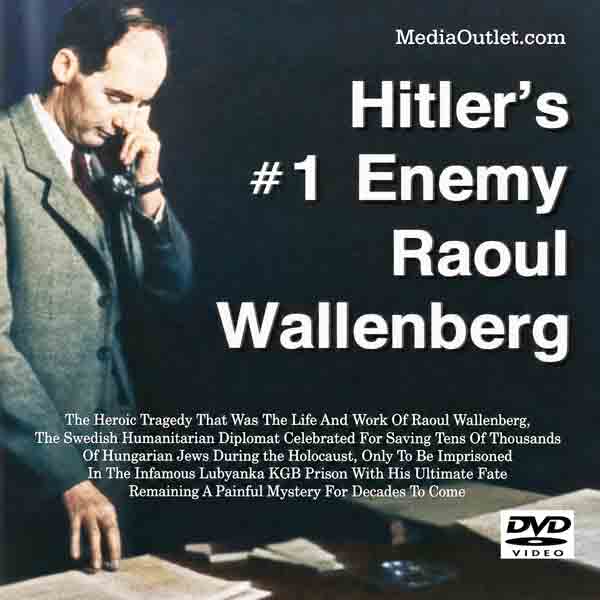
August 4, 1912: #BOTD: #HBD! Raoul
Wallenberg, Swedish architect, businessman, diplomat, and
humanitarian (d. unknown; falsely reported by KBG as deceased on
July 17, 1947; declared dead by the Swedish Tax Agency in October
2016) is #born Raoul Gustaf Wallenberg in Stockholm, Sweden. Raoul
Gustaf Wallenberg is widely celebrated for saving tens of
thousands of Jews in Nazi-occupied Hungary during the Holocaust
from German Nazis and Hungarian Fascists during the later stages
of World War II. While serving as Sweden's special envoy in
Budapest between July and December 1944, Wallenberg issued
protective passports and sheltered Jews in buildings designated as
Swedish territory. On 17 January 1945, during the Siege Of
Budapest by the Red Army, Wallenberg was detained by SMERSH on
suspicion of espionage and subsequently disappeared. He was later
reported to have died on 17 July 1947 while imprisoned by the KGB
secret police in the Lubyanka, the KGB headquarters and affiliated
prison in Moscow. The motives behind Wallenberg's arrest and
imprisonment by the Soviet government, along with questions
surrounding the circumstances of his death and his ties to US
intelligence, remain mysterious and are the subject of continued
speculation. Because of his courageous actions on behalf of the
Hungarian Jews, Raoul Wallenberg has been the subject of numerous
humanitarian honors in the decades following his presumed death.
In 1981, U.S. Congressman Tom Lantos, himself one of those saved
by Wallenberg, sponsored a bill making Wallenberg an Honorary
Citizen of the United States. He was the second person ever to
receive this honor, after Winston Churchill (and unlike
Churchill's, neither of his parents had been born in the United
States). Wallenberg is also an honorary citizen of Canada,
Hungary, Australia, and Israel. Israel has also designated
Wallenberg one of the Righteous Among the Nations. Monuments have
been dedicated to him, and streets have been named after him
throughout the world. A Raoul Wallenberg Committee of the United
States was created in 1981 to "perpetuate the humanitarian
ideals and the nonviolent courage of Raoul Wallenberg." It
gives the Raoul Wallenberg Award annually to recognize persons who
carry out those goals. Postage stamps have been issued in his
honour by Argentina, Australia, Canada, Dominica, Hungary,
Kazakhstan, Sweden, and the United States. On 26 July 2012, he was
awarded a Congressional Gold Medal by the United States Congress
"in recognition of his achievements and heroic actions during
the Holocaust." In October 2016, 71 years after his
disappearance, Wallenberg was formally declared dead by the
Swedish Tax Agency. During the Holocaust, Wallenberg saved an
estimated 33,000 Jews by issuing thousands of protective
documents, by securing the release of Jews from deportation
trains, death march convoys, labor service brigades, and by
establishing the International Ghetto, a network of 31 protected
houses. Several former prisoners have claimed to have seen
Wallenberg after his reported death in 1947. In February 1949,
former German Colonel Theodor von Dufving, a prisoner of war,
provided statements concerning Wallenberg. While in the transit
camp in Kirov, while being moved to Vorkuta, Dufving encountered a
prisoner dressed in civilian clothes with his own special guard.
The prisoner claimed that he was a Swedish diplomat and said he
was there "through a great error". Nazi hunter Simon
Wiesenthal searched for Wallenberg and collected several
testimonies. For example, British businessman Greville Wynne, who
was imprisoned in the Lubyanka prison in 1962 for his connection
to KGB defector Oleg Penkovsky, stated that he had talked to, but
could not see the face of, a man who claimed to be a Swedish
diplomat. Efim (or Yefim) Moshinsky claims to have seen Wallenberg
on Wrangel Island in 1962. An eyewitness asserted that she had
seen Wallenberg in the 1960s in a Soviet prison. During a private
conversation about the conditions of detention in Soviet prisons
at a Communist Party reception in the mid-1970s, a KGB general is
reported to have said that "conditions could not be that
harsh, given that in Lubyanka prison there is some foreign
prisoner who had been there now for almost three decades."
The last reported sightings of Wallenberg were by two independent
witnesses who said they had evidence that he was in a prison in
November 1987. John Farkas was a resistance fighter during World
War II and was the last man claiming to have seen Wallenberg
alive. Farkas' son has stated that there have been sightings of
Wallenberg "up into the 1980s in Russian prisons and
psychiatric hospitals." Raoul Wallenberg's half-brother, Guy
von Dardel, a well-known physicist, retired from CERN, was
dedicated to finding out his half-brother's fate. He traveled to
the Soviet Union about fifty times for discussions and research,
including an examination of the Vladimir prison records. Over the
years, Professor von Dardel compiled a 50,000-page archive of
interviews, journal articles, letters, and other documents related
to his quest. In 1991, Dardel initiated a Swedish-Russian working
group to search eleven separate military and government archives
from the former Soviet Union for information about Wallenberg's
fate, but the group was not able to find conclusive information.
Many, including Professor von Dardel and his daughters, Louise and
Marie, do not accept the various versions of Wallenberg's death.
They continue to request that the archives in Russia, Sweden, and
Hungary be opened to impartial researchers. In 2012, Russian
lieutenant-general Vasily Khristoforov, head of the registration
branch of the Russian Federal Security Service, said that the
Wallenberg case was still open. He dismissed allegations of a
continuing cover-up; referring to the legacy Soviet agency from
which his department sprang, Khristoforov said: "This is
another state and a different special service." On Sale Until
Midnight Tonight PT!
https://store.earthstation1.com/hitler39s-1-enemy-raoul-wallenberg-391.html
Today's
EarthStation1.com 15% (Or More!) Off Commemorative Memorial Title:
Murder In Mississippi: Freedom Summer Murders Informants DVD MP4
USB
Today, August 4, 2026
August 4, 1964: Civil Rights Movements:
The American Civil Rights Movement (1954-1968): Anti-Black Racism
In The United States: Segregation: Racial Segregation: Black
Suffrage (Black Political Franchise, Black Franchise, Black Right
To Vote, Black Active Suffrage): Civil Rights Protests: Civil
Rights Protests In The United States: The Murders Of Chaney,
Goodman, And Schwerner (The Freedom Summer Murders, The
Mississippi Civil Rights Workers' Murders, The Mississippi Burning
Murders): -- #DOTD: #RIP: Three young civil rights workers, James
Chaney, Andrew Goodman and Michael Schwerner, are found murdered
and buried in an earthen dam outside Philadelphia, Mississippi.
They had disappeared on June 21 after being detained by Neshoba
County police on charges of speeding. They had left Meridian,
Mississippi, at 9 a.m. on June 21 to investigate a church burning.
They were expected back by 4 p.m. When they failed to return, a
search was begun. They were participating in the Mississippi
Summer Project organized by the Student Nonviolent Coordinating
Committee (SNCC) to increase black voter registration. When their
car was found burned on June 23, President Lyndon Johnson ordered
the FBI to search for the men. On June 21, 2005, Edgar Ray Killen,
who had previously been acquitted for the murders of James Chaney,
Andrew Goodman, and Mickey Schwerner, was convicted of
manslaughter 41 years afterwards. On Sale Until Midnight Tonight
PT!
https://store.earthstation1.com/murder-in-mississippi-freedom-summer-murders-informants-dvd-mp4-us4.html
Today's
EarthStation1.com 15% (Or More!) Off Commemorative Memorial Title:
Malcolm X: Make It Plain Biography Documentary DVD Download USB
Drive
Today, August 4, 2026
August 4, 1885 (1895?): #BOTD: #HBD!
Lewis H. Michaux, African American Harlem bookseller and civil
rights activist, owner from 1932 and 1974 of the African National
Memorial Bookstore in Harlem, New York City, one of the most
prominent African American bookstores in the country (d. August
25, 1976) is #born in Newport News, Virginia. Although his birth
year and day is uncertain (his tombstone reads "AUG. 3,
1883", likely due to its numerology being 8/3/1882),
according to The New York Times he was born August 4, 1885. Before
coming to New York he worked as a pea picker, window washer and
deacon in the Philadelphia church of his brother, Lightfoot
Solomon Michaux, a broadcast evangelist who acted as an advisor
for U.S. President Harry S. Truman and helped to build a 500+ unit
housing development for the poor. Lewis Michaux had little formal
education. He was married to Bettie Kennedy Logan and they had one
son. He founded the African National Memorial Bookstore on 7th
Avenue and stayed there until 1968, when Michaux was forced to
move the store to West 125th Street (on the corner of 7th street)
to give space to the State Harlem office building. The bookstore
finally closed in 1974 after another row with authorities over its
location. Michaux stimulated a generation of students,
intellectuals, writers and artists. He called his bookstore "House
Of Common Sense And The Home Of Proper Propaganda". The store
became an important reading room of the Civil Rights Movement.
While Izzy Young's Folk Center further south in Greenwich Village
became a hang-out during the folk revival of the late 1950s and
early 1960s, including the rising Bob Dylan, the Memorial
Bookstore up in Harlem was a rare place for black people and
scholars and anyone interested in literature by, or about, African
Americans, Africans, Caribbeans and South Americans. Michaux's
bookstore had over 200,000 texts and was the nation's largest on
its subject. Everyone, white and black, was encouraged to begin
home libraries and those who were short of money were allowed to
sit down and read. Michaux was active in the Black nationalism
movement from the 1930s to the 1960s and supported Marcus Garvey's
Pan-Africanism. Harlem had been the headquarters of Garvey's
Universal Negro Improvement Association and African Communities
League of the world - the largest mass black movement of the
times. Alagba (Elder) Michaux was a personal friend of Malcolm X
and a member of the Organization of Afro-American Unity that was
formed in 1964. When it came to religion, Michaux had a sign in
the store reading "Christ Is Black", but he also
departed from his brother Lightfoot Solomon's affiliations with
Christianity, saying: "The only lord I know, is the landlord.
Lewis H. Michaux died of cancer at Calvary Hospital in the Bronx,
New York. He is buried at Greenwood Union Cemetery in Rye, New
York. On Sale Until Midnight Tonight PT!
https://store.earthstation1.com/malcolm-x-make-it-plain-biography-documentary-dvd-download-usb-drive.html
Today's
EarthStation1.com 15% (Or More!) Off Commemorative Memorial Title:
Television: A History Of Broadcast TV DVD MP4 Download USB Drive
Today, August 4, 2026
August 4, 1987: The History Of
Broadcasting: The History Of Television Broadcasting: Censorship:
Censorship Of Broadcasting: Censorship Of Broadcasting In The
United States: The Federal Communications Commission (FCC): The
Fairness Doctrine: -- The FCC rescinds the 1949 Fairness Doctrine
which had required holders of broadcast licenses of radio and
television stations to present controversial issues of public
importance and to do so "fairly" in a manner that fairly
reflected differing viewpoints, an abolishment that prompted some
to urge its reintroduction through either Commission policy or
congressional legislation; however, later the FCC removed the rule
that implemented the policy from the Federal Register in August
2011. The fairness doctrine had two basic elements: It required
broadcasters to devote some of their airtime to discussing
controversial matters of public interest, and to air contrasting
views regarding those matters. Stations were given wide latitude
as to how to provide contrasting views: It could be done through
news segments, public affairs shows, or editorials. The doctrine
did not require equal time for opposing views but required that
contrasting viewpoints be presented. The demise of this FCC rule
has been cited as a contributing factor in the rising level of
party polarization in the United States. While the original
purpose of the doctrine was to ensure that viewers were exposed to
a diversity of viewpoints, it was used by both the Kennedy and
later the Johnson administration to combat political opponents
operating on talk radio. In 1969 the United States Supreme Court,
in Red Lion Broadcasting Co. v. FCC, upheld the FCC's general
right to enforce the fairness doctrine where channels were
limited. However, the court did not rule that the FCC was obliged
to do so. The courts reasoned that the scarcity of the broadcast
spectrum, which limited the opportunity for access to the
airwaves, created a need for the doctrine. The fairness doctrine
is not the same as the equal-time rule, which is still in place.
The fairness doctrine deals with discussion of controversial
issues, while the equal-time rule deals only with political
candidates. On Sale Until Midnight Tonight PT!
https://store.earthstation1.com/television-1988-tv-documentary-series-8-shows-4-dual-laye198884.html
Today's
EarthStation1.com 15% (Or More!) Off Commemorative Memorial Title:
American Hot Wax (1978) DVD, MP4 Video Download, USB Flash Drive
Today, August 4, 2026
August 4, 1939: #BOTD: #HBD! Frankie
Ford, American rock and roll and rhythm and blues singer, best
known for his 1959 hit "Sea Cruise" (d. September 28,
2015) is #born Vincent Francis Guzzo, Jr. in Gretna, Louisiana,
across the Mississippi River from New Orleans, and was the adopted
son of Vincent and Anna Guzzo, who named him Vincent Francis
Guzzo, Jr. He learned to sing and dance at an early age, and when
at high school joined a group, the Syncopators, as singer and
pianist. He was spotted by manager Joe Caronna, who took him to
Johnny Vincent of Ace Records. Taking the stage name Frankie Ford,
he made his first recordings for Ace in 1958. He toured locally in
Louisiana, before recording a vocal overdub on the song "Sea
Cruise", a song written and originally recorded by Huey
"Piano" Smith with his group, The Clowns, and featuring
overdubbed bells and ships' horns. As Smith already had a record
in the charts, and was away touring, the record label decided to
release Ford's version, and it rose to #14 on the US pop chart and
#11 on the R & B chart, selling over one million copies, and
gaining gold disc status. Ford toured widely around the US, but
his later records were less successful, with his versions of
"Alimony" and "Time After Time" only reaching
the lower reaches of the national charts. He also recorded a
novelty record in praise of a local TV presenter, "Morgus the
Magnificent", with musicians including Mac Rebennack and
Jerry Byrne, but it failed to sell. Ace released an LP by Ford,
Let's Take A Sea Cruise With Frankie Ford, before the singer moved
to Imperial Records in late 1960. He recorded with producer Dave
Bartholomew, and released a version of "You Talk Too Much",
but Ford's recording missed out in competition with one by Joe
Jones which was issued almost simultaneously. In 1961, his version
of Boyd Bennett's 1955 hit "Seventeen" was Ford's last
chart entry. Ford was drafted in 1962, and performed for troops in
Japan, Vietnam and Korea. He later recorded occasionally for small
labels, but mainly performed in clubs in and around New Orleans.
He appeared in the 1978 movie American Hot Wax, and toured in
Britain and Europe, recording the album New Orleans Dynamo in
London in 1989. He continued to record and perform through the
1990s. Ford co-owned the Briarmeade record label, which issued
several singles and albums by him from the 1970s to the 2000s. On
May 16, 2010, at the Louisiana Music Homecoming in Erwinville,
Ford was inducted into the Louisiana Music Hall of Fame. Ford died
in Gretna at the age of 76 on September 28, 2015, following a long
illness. He is buried at Westlawn Memorial Park And Mausoleum in
Gretna. On Sale Until Midnight Tonight PT!
https://store.earthstation1.com/american-hot-wax-1978-dvd-alan-freed-rock-39n39-ro19783939.html
Today's
EarthStation1.com 15% (Or More!) Off Commemorative Memorial Title:
Combat At Sea Documentary Series + Bonus MP4 Video Download DVD
Set
Today, August 4, 2026
August 4, 1854: Japan: The History Of
Japan: The United States: The History Of The United States: United
States-Japan Relations: Sakoku (Japanese: "Locked Country)
(Japanese Isolationism Of The Tokugawa Shogunate [Edo Shogunate]):
National Symbols Of Japan: National Flags: Flags Of Japan: The
Nisshoki (Japanese: "Flag Of The Sun") (The Hinomaru
[Japanese: "Ball Of The Sun"]): -- The Tokugawa
Shogunate orders the establishment of the Hinomaru flag as the
official flag to be flown from Japanese ships, in order to
distinguish them from American and Russian vessels they were
trading with. The Hinomaru was decreed the merchant flag of Japan
in 1870, and was the legal national flag from 1870 to 1885, making
it the first national flag Japan adopted. The national flag of
Japan is a rectangular white banner bearing a crimson-red disc at
its center. This flag is officially called Nisshoki ("Flag Of
Sun"), but is more commonly known in Japan as Hinomaru
("Circle Of The Sun"). It embodies the country's
sobriquet: Nippon or Nihon (both pronunciations are used in
Japanese), literally meaning "The Suns Origin", often
translated "Land of the Rising Sun". The Nisshoki flag
was first officially designated as the national flag of Japan by
the Act on National Flag and Anthem, which was promulgated and
became effective on August 13, 1999; no earlier legislation had
specified a national flag, though the sun-disc flag had already
become the de facto national flag of Japan. The sun plays an
important role in Japanese mythology and religion as the Emperor
is said to be the direct descendant of the sun goddess Amaterasu
and the legitimacy of the ruling house rested on this divine
appointment and descent from the chief deity of the predominant
Shinto religion. The name of the country as well as the design of
the flag reflect this central importance of the sun. Public
perception of the national flag varies. Historically, both Western
and Japanese sources claimed the flag was a powerful and enduring
symbol to the Japanese. Since the end of World War II (the Pacific
War), the use of the flag and the national anthem Kimigayo has
been a contentious issue for Japan's public schools. Disputes
about their use have led to protests and lawsuits. The flag is not
frequently displayed in Japan due to its association with
ultranationalism. To some Okinawans, the flag represents the
events of World War II and the subsequent U.S. military presence
there. For some nations that have been occupied by Japan, the flag
is a symbol of aggression and imperialism. The Hinomaru was used
as a tool against occupied nations for purposes of intimidation,
asserting Japan's dominance, or subjugation. Several military
banners of Japan are based on the Hinomaru, including the sunrayed
naval ensign. The Hinomaru also serves as a template for other
Japanese flags in public and private use. On Sale Until Midnight
Tonight PT!
https://store.earthstation1.com/combat-at-sea-dvd-set-all-12-naval-warfare-tv-shows-6-di126.html
Today's
EarthStation1.com 15% (Or More!) Off Commemorative Memorial Title:
The Monarchy: British Royal Family History TV Series DVD MP4 USB
Drive
Today, August 4, 2026
August 4, 1900: #BOTD: #HBD! Queen
Elizabeth The Queen Mother, England's Queen Mother Elizabeth
Angela Marguerite Bowes-Lyon, wife of King George VI. mother of
Queen Elizabeth II and Countess of Snowdon Princess Margaret,
Queen consort of the United Kingdom and the Dominions from her
husband's accession in 1936 until his death in 1952, after which
she was known as Queen Elizabeth The Queen Mother, last Empress of
India (d. March 30, 2002) is #born Elizabeth Angela Marguerite
Bowes-Lyon in Hertfordshire, England. Born into the Bowes-Lyon
family of British nobility, she came to prominence in 1923 when
she married the Duke of York, the second son of King George V and
Queen Mary. The couple and their daughters embodied traditional
ideas of family and public service. She undertook a variety of
public engagements and became known for her consistently cheerful
countenance. In 1936, her husband unexpectedly became king when
his brother, Edward VIII, abdicated in order to marry the American
divorcee Wallis Simpson. Elizabeth then became queen. She
accompanied her husband on diplomatic tours to France and North
America before the start of the Second World War. During the war,
her seemingly indomitable spirit provided moral support to the
British public. In recognition of her role as an asset to British
interests, Adolf Hitler is said to have called her "the most
dangerous woman in Europe" because he viewed her popularity
as a threat to German interests. However, before the war both she
and her husband, like most of Parliament and the British public,
had supported appeasement and Prime Minister Neville Chamberlain,
believing after the experience of the First World War that war had
to be avoided at all costs. After the resignation of Chamberlain,
the King asked Winston Churchill to form a government. Although
the King was initially suspicious of Churchill's character and
motives, in due course both the King and Queen came to respect and
admire him. After the war, her husband's health deteriorated and
she was widowed at the age of 51. Her elder daughter, aged 25,
became the new queen. From the death of Queen Mary in 1953
Elizabeth was viewed as the matriarch of the British royal family.
In her later years, she was a consistently popular member of the
family, even when other members were suffering from low levels of
public approval. She continued an active public life until just a
few months before her death at 15:15 GMT at the Royal Lodge,
Windsor, aged of 101, seven weeks after the death of her younger
daughter, Princess Margaret. Her surviving daughter, Queen
Elizabeth II, was by her side. She is buried at St. George's
Chapel, Windsor. The Queen Mother had been suffering from a chest
cold since Christmas 2001. At 101 years and 238 days old she was
the first member of the British royal family to live past the age
of 100. She was the longest-living member of the British royal
family at the time of her death. Her surviving sister-in-law,
Princess Alice, Duchess of Gloucester, exceeded that, dying at the
age of 102 on Octobe 29, 2004. On Sale Until Midnight Tonight PT!
https://store.earthstation1.com/the-monarchy-3-part-british-royal-family-tv-series-dvd-mp4-u34.html
Today's
EarthStation1.com 15% (Or More!) Off Commemorative Memorial Title:
Betty Boop: Boop-Oop-A-Doop With Steve Allen DVD, Download, USB
Drive
Today, August 4, 2026
August 4, 1904: #BOTD: #HBD! Helen Kane,
American singer and actress (d. September 26, 1966) is #born Helen
Clare Schroeder in The Bronx, New York City. Her signature song
was "I Wanna Be Loved by You". Kane's voice and
appearance were a source for Fleischer Studios animator Grim
Natwick when creating Betty Boop. In 1932, Helen filed a 250K USD
infringement lawsuit against Max Fleischer and Paramount for
unfair competition and exploitation of her personality and image.
Before his death, cartoonist Grim Natwick admitted he had designed
a young girl based upon a photo of Kane. Margie Hines, Mae
Questel, Bonnie Poe, Little Ann Little, and Kate Wright provided
the voice for Betty Boop. They had all taken part in a 1929
Paramount contest, which was a search for Helen Kane
impersonators. It was later proven in court that Kane based her
style in part on Baby Esther, an African American singer and
entertainer of the late 1920s who was known for her "baby"
singing style. Baby Esther performed regularly at the Cotton Club
in Harlem, and theatrical manager Lou Walton testified during the
Fleischer v. Kane trial that Helen Kane saw Baby Esther's cabaret
act in 1928 with him and appropriated Jones' style of singing,
changing the interpolated words "boo-boo-boo" and
"doo-doo-doo" to "boop-boop-a-doop" in a
recording of "I Wanna Be Loved By You". Kane never
publicly admitted this. Testimony was offered in court to convey
the impression that Helen Kane adopted Baby Esther's boops to
further her own popularity as a singer. Baby Esther made funny
expressions and interpolated meaningless sounds at the end of each
bar of music in her songs. Kane was nevertheless known as the
"Boop" girl. In April 1928 Miss Kane and her manager
attended a performance of Miss Jones in a New York night club and
just a few weeks later began to "boop" at a theatre.
When Kane attempted to sue Fleischer Studios for using her
persona, the studios defended themselves by arguing that Kane
herself had taken it from "Baby Esther" Jones. An early
test sound film of Baby Esther's performance was used as evidence.
With the hardships of the Great Depression biting, the flamboyant
world of the flapper was over, and Kane's style began to date
rapidly. After 1931 she lost the favor of the moviemakers, who
chose other singers for their films. She appeared in a stage
production called Shady Lady in 1933, and made appearances at
various nightclubs and theatres during the 1930s. In 1950 she
dubbed Debbie Reynolds, who performed "I Wanna Be Loved By
You" in the MGM musical biopic of songwriters Bert Kalmar and
Harry Ruby, Three Little Words. She did not appear in the film's
credits. She appeared on several TV shows in the 1950s and 1960s,
principally Toast of the Town, later known as The Ed Sullivan
Show. Kane's final public appearance was on the Sullivan Show on
St. Patrick's Day 1965. In addition, she was given overdue tribute
in 1958, on This is Your Life with Ralph Edwards. It brought a
tearful reunion with Helen's old friend, actress Fifi D'Orsay, and
a lifelong fan who once sent her money when she was down on her
luck. Renewed interest in Helen brought her a one-record contract
with MGM Records and appearances on I've Got a Secret and You
Asked for It. She sang on all of these TV shows. In November 1924,
Helen Schroeder married department store buyer Joseph Kane and
took his last name professionally. The marriage was over by 1925,
ended in 1928, and Helen went to Mexico to get a final divorce in
December 1932. In February 1933 she married an actor, Max Hoffman
Jr. After six months he deserted her and Helen filed for divorce.
The divorce was finalized in May 1935. In 1939 she married Dan
Healy, with whom she had worked in Good Boy in 1928. They opened a
restaurant in New York City called Healy's Grill. She remained
married to Healy for the rest of her life. Helen Kane battled
breast cancer for more than a decade. She had surgery in 1956 and
eventually received two hundred radiation treatments as an
outpatient at Memorial Hospital. She died on September 26, 1966,
at age 62, in her apartment in Jackson Heights, Queens, New York
City. Her husband of 27 years, Dan Healy, was at her bedside.
Helen Kane is buried in Long Island National Cemetery, in Suffolk
County, New York. On Sale Until Midnight Tonight PT!
https://store.earthstation1.com/betty-boop-boopoopadoop-dvd-steve-allen-documentary.html
Today's
EarthStation1.com 15% (Or More!) Off Commemorative Memorial Title:
The Secret Files Of J. Edgar Hoover Documentary DVD, Download, USB
Today, August 4, 2026
August 4, 1962: The Death Of Marilyn
Monroe: -- #DOTD: #RIP: Marilyn Monroe, American actress, model,
singer, film producer, cultural icon, sex symbol and beauty (b.
1926) #dies at age 36 from an apparent overdose of sleeping pills
inside her home at 12305 Fifth Helena Drive in Brentwood, Los
Angeles, California. Although Monroe's death was ruled a probable
suicide, several conspiracy theories have been proposed in the
decades following her death. She is buried in the Corridor of
Memories, Crypt 24 of Westwood Memorial Park in Westwood, Los
Angeles County, California. Born Norma Jeane Mortenson in Los
Angeles, California, she was famous for playing comic "blonde
bombshell" characters, and became one of the most popular sex
symbols of the 1950s and emblematic of the era's attitudes towards
sexuality. Although she was a top-billed actress for only a
decade, her films grossed 200M USD by the time of her unexpected
death in 1962 (equivalent to 2B USD in 2017). More than half a
century later, she continues to be a major popular culture icon.
Born and raised in Los Angeles, Monroe spent most of her childhood
in foster homes and an orphanage and married at the age of
sixteen. While working in a radioplane factory in 1944 as part of
the war effort, she was introduced to a photographer from the
First Motion Picture Unit and began a successful pin-up modeling
career. The work led to short-lived film contracts with Twentieth
Century-Fox (1946-1947) and Columbia Pictures (1948). After a
series of minor film roles, she signed a new contract with Fox in
1951. Over the next two years, she became a popular actress and
had roles in several comedies, including As Young as You Feel and
Monkey Business, and in the dramas Clash by Night and Don't Bother
to Knock. Monroe faced a scandal when it was revealed that she had
posed for nude photos before she became a star, but the story did
not tarnish her career and instead resulted in increased interest
in her films. By 1953, Monroe was one of the most marketable
Hollywood stars; she had leading roles in the noir film Niagara,
which focused on her sex appeal, and the comedies Gentlemen Prefer
Blondes and How to Marry a Millionaire, which established her star
image as a "dumb blonde". Although she played a
significant role in the creation and management of her public
image throughout her career, she was disappointed when she was
typecast and underpaid by the studio. She was briefly suspended in
early 1954 for refusing a film project but returned to star in one
of the biggest box office successes of her career, The Seven Year
Itch. When the studio was still reluctant to change Monroe's
contract, she founded a film production company in late 1954; she
named it Marilyn Monroe Productions (MMP). She dedicated 1955 to
building her company and began studying method acting at the
Actors Studio. In late 1955, Fox awarded her a new contract, which
gave her more control and a larger salary. Her subsequent roles
included a critically acclaimed performance in Bus Stop (1956) and
the first independent production of MMP, The Prince and the
Showgirl (1957). Monroe won a Golden Globe for Best Actress for
her work in Some Like It Hot (1959), a critical and commercial
success. Her last completed film was the drama The Misfits (1961).
Monroe's troubled private life received much attention. She
struggled with substance abuse, depression, and anxiety. Her
second and third marriages, to retired baseball star Joe DiMaggio
and playwright Arthur Miller, respectively, were highly publicized
and both ended in divorce. On Sale Until Midnight Tonight PT!
https://store.earthstation1.com/the-secret-files-of-j-edgar-hoover-documentary-dvd.html
Today's
EarthStation1.com #OnThisDay Commemorative Memorial Title: Super
Sense Animal Perception/Plant Adaptation TV Series DVD, MP4, USB
Today, August 4, 2026 August 4: Assistance Dog Day: -- Dogs are
a man's best friend because of their loyalty and dedication, but
assistant dogs take this to a whole new level. These dogs help
people with disabilities or illnesses to navigate through life.
They help where they can and perform simple tasks like guiding
their owner's path, helping fetch an item, and lots of other
activities. These dogs and their trainers deserve to be
celebrated, and so this brought about Assistance Dog Day which
aims to raise funds and increase awareness of the work they do. It
makes up part of International Assistance Dog Week. Assistance Dog
Day is part of International Assistance Dog Week (I.A.D.W.) and
was created to recognize all of the dedicated, hardworking
assistance dogs helping individuals mitigate their
disability-related limitations. These dogs amazingly transform the
lives of their human partners with physical and mental
disabilities by serving as their helper, companion, aide, best
friend, and close member of their family. Assistance dogs are not
for personal defense, protection, or comfort. Different types of
assistance dogs do different things. Guide dogs help the blind and
those with vision loss to cross the street, walk through doorways,
and move around obstacles. Hearing alert dogs help those with
hearing loss as they recognize alarms and sirens, as well as the
ringing of telephones and doorbells. Other assistance dogs do
other things to help their human counterparts. Assistance Dog Day
is also done to raise awareness and educate the public about how
these specially trained dogs are helping so many people in the
community. Apart from that, the day also honors the puppy owners
and trainers of assistance dogs, whose efforts better the lives of
others. The heroic deeds of assistance dogs are also recognized on
this day with lots of fun activities on the day. The day might not
be what it is today if not for the efforts of Marcie Davis, a
woman who has been a paraplegic for over 35 years. She wrote the
book "Working Like Dogs: The Service Dog Guidebook." The
book focuses on personal stories, checklists, and practical tips
to provide readers with a guide about service dogs and she is the
host of the internet radio program, "Working Like Dogs."
She founded Working Like Dogs to honor assistance dogs around the
world and she's part of the sponsors of International Assistance
Dog Week.
https://store.earthstation1.com/super-sense--animal-perception-tv-series-dvd-mp4-download-usb-driv4.html
August 4: Assistance Dog Day: -- Dogs are
a man's best friend because of their loyalty and dedication, but
assistant dogs take this to a whole new level. These dogs help
people with disabilities or illnesses to navigate through life.
They help where they can and perform simple tasks like guiding
their owner's path, helping fetch an item, and lots of other
activities. These dogs and their trainers deserve to be
celebrated, and so this brought about Assistance Dog Day which
aims to raise funds and increase awareness of the work they do. It
makes up part of International Assistance Dog Week. Assistance Dog
Day is part of International Assistance Dog Week (I.A.D.W.) and
was created to recognize all of the dedicated, hardworking
assistance dogs helping individuals mitigate their
disability-related limitations. These dogs amazingly transform the
lives of their human partners with physical and mental
disabilities by serving as their helper, companion, aide, best
friend, and close member of their family. Assistance dogs are not
for personal defense, protection, or comfort. Different types of
assistance dogs do different things. Guide dogs help the blind and
those with vision loss to cross the street, walk through doorways,
and move around obstacles. Hearing alert dogs help those with
hearing loss as they recognize alarms and sirens, as well as the
ringing of telephones and doorbells. Other assistance dogs do
other things to help their human counterparts. Assistance Dog Day
is also done to raise awareness and educate the public about how
these specially trained dogs are helping so many people in the
community. Apart from that, the day also honors the puppy owners
and trainers of assistance dogs, whose efforts better the lives of
others. The heroic deeds of assistance dogs are also recognized on
this day with lots of fun activities on the day. The day might not
be what it is today if not for the efforts of Marcie Davis, a
woman who has been a paraplegic for over 35 years. She wrote the
book "Working Like Dogs: The Service Dog Guidebook." The
book focuses on personal stories, checklists, and practical tips
to provide readers with a guide about service dogs and she is the
host of the internet radio program, "Working Like Dogs."
She founded Working Like Dogs to honor assistance dogs around the
world and she's part of the sponsors of International Assistance
Dog Week.
https://store.earthstation1.com/super-sense--animal-perception-tv-series-dvd-mp4-download-usb-driv4.html
Today's
EarthStation1.com #OnThisDay Commemorative Memorial Title:
Propaganda Posters JPG Photo + MPG Video DVD-ROM, Download, USB
Stick
Today, August 4, 2026August 4: International Owl Awareness
Day: -- While they can't turn their heads all the way around like
some people believe, these fascinating creatures do have lots of
spectacular features going for them! Today we promote public
education about owls and encourage more people to support efforts
to protect their habitat and help these birds avoid further
decline. While some people tend to think of owls during October
because of their relationships with spooky Halloween, this day is
set aside to be celebrated in early August! The event was started
through the efforts of owl and bird conservationists who wanted
more people to know and take action about the decline in the
population of many owl species. Since its inception, International
Owl Awareness Day has been promoted by several different reputable
organizations and institutions, such as the International Owl
Center, the University of Bath, the American Eagle Foundation, and
more.
https://store.earthstation1.com/propaganda-posters-cd-jpg-images.html
Today's
EarthStation1.com #OnThisDay Commemorative Memorial Title: Desert
Triumph: The Gulf War TV Documentary Series DVD & MP4 Download
Today, August 4, 2026August 4, 1990: The Aftermath Of World
War II: The Cold War: The Gulf War (The Persian Gulf War, Gulf War
I): The Invasion Of Kuwait: -- Alaa Hussein Ali is appointed Prime
Minister of the Provisional Government of Free Kuwait, and Ali
Hassan al-Majid is appointed Governor of the Kuwait Governorate,
which is declared the 19th Governorate of Iraq. The day prior,
President of the United States George H.W. Bush announced that
U.S. Navy ships have been deployed to the Persian Gulf as part of
Operation Desert Shield, which began on August 2, 1990 as the
United States initiated a buildup of military forces to provide
for Saudi Arabia's defense. Operation Desert Shield lasted from
August 2, 1990 to January 16, 1991, when it was superceded by
Operation Desert Storm (January 17, 1991 - February 28, 1991), a
war waged by coalition forces from 35 nations led by the United
States against Iraq in order to drive them away from the Saudi
Arabian border and ultimately to eject them from Kuwait. On August
2, 1990, the Invasion Of Kuwait by Iraq began shortly after
midnight local time, when about 100,000 Iraqi troops invaded
Kuwait amid claims that Kuwait threatened Iraq's economic
existence by overproducing oil and driving prices down on the
world market. Also on August 2, 1990, United Nations Security
Council Resolution 660 was issued by he United Nations Security
Council (UNSC) condemning the Iraqi Invasion Of Kuwait and
demanding that Iraq withdraw immediately and unconditionally to
positions as they were on August 1, 1990. It was the first of
twelve resolutions on the conflict passed in 1990. On July 31,
Egypt and Saudi Arabia attempted to mediate between the two
countries with a meeting on meeting between Iraq and Kuwait in
Jeddah, Saudi Arabia. Iraq clearly stated on this occasion that it
would not use armed forces against neighboring countries. However,
at dawn on August 2, the Iraqi army that was amassed near the
border suddenly invaded Kuwait. On July 24, 1990, President of
Egypt Hosni Mubarak traveled to Baghdad to meet with Saddam
Hussein and discuss the dispute between Kuwait and Iraq, to no
avail. On July 22, 1990, Iraq began deploying troops to the
Iraqi-Kuwaiti border, creating a massive military buildup in
preparation for what would become the Iraqi Invasion Of Kuwait,
which ultimately resultd in the Gulf War (Gulf War I). Iraq
accused Kuwait onn July 15, 1990 of stealing oil from the Rumaila
oil field, an Iraqi oil field near the Iraqi-Kuwaiti border, and
threatened military action in response. In 1988 Iraq's Oil
Minister, Issam al-Chalabi, stressed a further reduction in the
crude oil production quota of Organization of the Petroleum
Exporting Countries (OPEC) members so as to end the 1980s oil
glut. Chalabi argued that higher oil prices would help Iraq
increase its revenues and pay back its 60B USD debt. However,
given its large downstream petroleum industry, Kuwait was less
concerned about the prices of crude oil and in 1989, Kuwait
requested OPEC to increase the country's total oil production
ceiling by 50% to 1.35 million bpd. Throughout much of the 1980s,
Kuwait's oil production was considerably above its mandatory OPEC
quota and this had prevented a further increase in crude oil
prices. A lack of consensus among OPEC members undermined Iraq's
efforts to end the oil glut and consequently prevented the
recovery of its war-crippled economy. According to former Iraqi
Foreign Minister Tariq Aziz, "every 1 USD drop in the price
of a barrel of oil caused a 1B USD drop in Iraq's annual revenues
triggering an acute financial crisis in Baghdad". Kuwait's
refusal to decrease its oil production was viewed by Iraq as an
act of aggression against it. The increasingly tense relations
between Iraq and Kuwait were further aggravated when Iraq alleged
that Kuwait was slant-drilling across the border into Iraq's
Rumaila field. The dispute over Rumaila field started in 1960 when
an Arab League declaration marked the Iraq-Kuwait border 2 miles
north of the southernmost tip of the Rumaila field. During the
Iran-Iraq War, Iraqi oil drilling operations in Rumaila declined
while Kuwait's operations increased. In 1989, Iraq accused Kuwait
of using "advanced drilling techniques" to exploit oil
from its share of the Rumaila field. Iraq estimated that 2.4B USD
worth of Iraqi oil was "stolen" by Kuwait and demanded
compensation. Kuwait dismissed the accusations as a false Iraqi
ploy to justify military action against it. Several foreign firms
working in the Rumaila field also dismissed Iraq's slant-drilling
claims as a "smokescreen to disguise Iraq's more ambitious
intentions". On July 25, 1990, only a few days before the
Iraqi invasion, OPEC officials said that Kuwait and the United
Arab Emirates had agreed to a proposal to limit daily oil output
to 1.5 million barrels, thus potentially settling differences over
oil policy between Kuwait and Iraq. At the time of the settlement,
more than 100,000 Iraqi troops were deployed along the Iraq-Kuwait
border, and American officials expressed little indication of
decline in tensions despite the OPEC settlement.
https://store.earthstation1.com/desert-triumph-the-gulf-war-tv-documentary-series-dvd-amp-mp4-downloa4.html
Today's
EarthStation1.com #OnThisDay Commemorative Memorial Title: Air
Bombing Vietnam & Punishing Prisoner Pilots MP4 Video Download
DVD
Today, August 4, 2026August 4, 1969: The Aftermath Of World
War II: The Cold War: The Cold War In Asia: The Indochina Wars:
The Vietnam War (The Second Indochina War, The Vietnam Conflict,
The Resistance War Against America): The United States In The
Vietnam War: The Paris Peace Negotiations (The Paris Peace Talks):
-- At the apartment of French intermediary politician Jean
Sainteny in Paris, American representative Henry Kissinger and
North Vietnamese representative Xuan Thuy begin secret peace
negotiations. The negotiations will eventually fail. Jean Sainteny
or Jean Roger (May 29, 1907, Vesinet - February 25, 1978) was a
French politician who was sent to Vietnam after the end of the
Second World War in order to accept the surrender of the Japanese
forces and to attempt to reincorporate Vietnam into French
Indochina. He traveled to Hanoi on August 22, 1945 with American
OSS officers, Archimedes Patti and Carleton B. Swift Jr. before
being put under house arrest by the Japanese. The son-in-law of
the prime minister Albert Sarraut, he was an insurance broker by
trade. He was in charge of the Normandy sector for the French
resistance under the pseudonym ""Dragon". He was
captured by the Gestapo but succeeded in escaping and took part in
organising the Normandy landings, passing to George Patton the
information that allowed the Allies to reach Paris. In 1946, he
was sent by the French government to Vietnam to negotiate with Ho
Chi Minh. He reached the Ho-Sainteny agreement with Ho to keep
Vietnam in the French Union. The agreement became ineffective
after the bombing of Haiphong, ordered by the High Commissioner
Thierry d'Argenlieu and then Sainteny played only a minor role in
French-Vietnamese relations. He was wounded in an ambush and after
the Geneva Accords, he returned to Hanoi as a French envoy. Xuan
Thuy (September 2, 1912 - June 20, 1985) was a North Vietnamese
political figure. He was the Foreign Minister of North Vietnam
from 1963 to 1965 and then chief negotiator of the North
Vietnamese at the Paris Peace talks. Henry Alfred Kissinger, born
Heinz Alfred Kissinger (b. May 27, 1923) is an American statesman,
political scientist, diplomat and geopolitical consultant who
served as the United States Secretary Of State and National
Security Advisor under the presidential administrations of Richard
Nixon and Gerald Ford. A Jewish refugee who fled Nazi Germany with
his family in 1938, he became National Security Advisor in 1969
and United States Secretary Of State in 1973. For his actions
negotiating a ceasefire in Vietnam, Kissinger received the 1973
Nobel Peace Prize under controversial circumstances, with two
members of the committee resigning in protest. Kissinger later
sought, unsuccessfully, to return the prize after the ceasefire
failed.
https://store.earthstation1.com/air-bombing-vietnam-amp-punishing-prisoner-pilots-mp4-video-download-dv4.html
Today's
EarthStation1.com #OnThisDay Commemorative Memorial Title: Hans
Christian Andersen: A True Myth DVD, Video Download, USB Drive
Today, August 4, 2026August 4, 1875: #DOTD: #RIP: Hans
Christian Andersen, often referred to in Scandinavia as H. C.
Andersen, prolific writer of plays, travelogues, novels and poems,
best remembered for his fairy tales (b. April 2, 1805) #dies in a
house called Rolighed (literally: calmness), near Copenhagen,
Denmark, the home of his close friends, the banker Moritz G.
Melchior and his wife. Shortly before his death, Andersen had
consulted a composer about the music for his funeral, saying:
"Most of the people who will walk after me will be children,
so make the beat keep time with little steps." His body was
interred in the Assistens Kirkegard in the Norrebro area of
Copenhagen, in the family plot of the Collins. In 1914, however,
the stone was moved to another cemetery (today known as
"Frederiksbergs Aeldre kirkegaard"), where younger
Collin family members were buried. For a period, his, Edvard
Collin's and Henriette Collin's graves were unmarked. A second
stone has been erected, marking H.C. Andersen's grave, now without
any mention of the Collin couple, but all three still share the
same plot. At the time of his death, Andersen was internationally
revered, and the Danish Government paid him an annual stipend as a
"national treasure". Hans Christian Andersen was born in
Odense, Denmark. Andersen's popularity is not limited to children;
his stories express themes that transcend age and nationality.
Andersen's fairy tales, of which no fewer than 3381 works have
been translated into more than 125 languages, have become
culturally embedded in the West's collective consciousness,
readily accessible to children, but presenting lessons of virtue
and resilience in the face of adversity for mature readers as
well. Some of his most famous fairy tales include "The
Emperor's New Clothes", "The Little Mermaid", "The
Nightingale", "The Snow Queen", "The Ugly
Duckling", "Thumbelina", The Princess And The Pea",
and many others. His stories have inspired ballets, plays, and
animated and live-action films. There is much evidence to suggest
that Andersen was an illegitimate son of King Christian VIII of
Denmark. One of Copenhagen's widest and busiest boulevards is
labeled "H.C. Andersens Boulevard".
https://store.earthstation1.com/hans-christian-anderson-a-true-myth-dvd-king-of-denmark39s-s39.html
Today's
EarthStation1.com #OnThisDay Commemorative Memorial Title: After
The Fox (1966) Peter Sellers Victor Mature DVD MP4 USB Drive
Today, August 4, 2026August 4, 1999: #DOTD: #RIP: Victor
Mature, American stage, film, and television actor who starred
most notably in several movies during the 1950s (b. January 29,
1913) #dies of leukemia at his Rancho Santa Fe, California home at
the age of 86. He is buried in the family plot, marked by a
replica of the Angel of Grief, at St. Michael's Cemetery in his
hometown of Louisville, Kentucky. For his contribution to the
motion-picture industry, Mature has a star on the Hollywood Walk
of Fame located at 6780 Hollywood Boulevard. Victor Mature was
born Victor John Mature in Louisville, Kentucky. His father,
Marcello Gelindo Maturi, later Marcellus George Mature, was a
cutler from Pinzolo, in the Italian part of the former County of
Tyrol (now Trentino in Italy, but at that time part of the
Austro-Hungarian Empire). His mother, Clara P. (Ackley), was
Kentucky-born and of Swiss heritage. Victor Mature was known for
his dark hair and smile. His best known film roles include One
Million B.C. (1940), My Darling Clementine (1946), Kiss of Death
(1947), Samson and Delilah (1949), and The Robe (1953). He also
appeared in many musicals opposite such stars as Rita Hayworth and
Betty Grable.
https://store.earthstation1.com/after-the-fox-dvd-1966-peter-sellers-victor-matur1966.html
Today's
EarthStation1.com #OnThisDay Commemorative Memorial Title:
Satchmo: Louis Armstrong Biography + Bonus Title DVD MP4 USB Drive
Today, August 4, 2026August 4, 1973: #DOTD: #RIP: Eddie
Condon, American guitarist, banjo player and bandleader (b.
November 16, 1905) #dies of bone disease at Mount Sinai Hospital
in New York City, New York at the age of 67. He is buried beside
his wife Phylllis at Christ Church Episcopal Graveyard in
Shrewsbury, New Jersey. Eddie Condon was born Albert Edwin Condon
in Goodland, Indiana, the son of John and Margaret (nee McGraw)
Condon. A leading figure in Chicago jazz, he also played piano and
sang. He grew up in Momence, Illinois, and Chicago Heights,
Illinois, where he attended St. Agnes and Bloom High School. After
playing ukulele, he switched to banjo and was a professional
musician by 1921. When he was 15 years old, he received his first
union card in Waterloo, Iowa. He was based in Chicago for most of
the 1920s, and played with such jazz notables as Bix Beiderbecke,
Jack Teagarden, and Frank Teschemacher. He and Red McKenzie formed
the Chicago Rhythm Kings in 1925. While in Chicago, Condon and
other white musicians would go to Lincoln Gardens to watch and
learn from King Oliver and his band. They later would frequent the
Sunset Cafe to see Louis Armstrong and his Hot Five for the same
reasons. In 1928, Condon moved to New York City. He frequently
arranged jazz sessions for various record labels, sometimes
playing with the artists he brought to the recording studios,
including Louis Armstrong and Thomas Fats Waller. He organised
racially integrated recording sessions, when these were still
rare, with Waller, Armstrong and Henry 'Red' Allen. He played with
the band of Red Nichols for a time. Later, from 1938 he had a long
association with Milt Gabler's Commodore Records. A handful of
records were issued under his own name: a July 28, 1928 two-song
session was recorded for OKeh, but only issued in England. On
October 30, 1928, an OKeh was issued as "Eddie Condon and his
Footwarmers", featuring Jack Teagarden. A further session on
February 8, 1929 yielded a record issued under the name "Eddie
Hot Shots" and issued on Victor's hot dance series. In 1933,
a further two sessions were recorded for Brunswick consisting of 6
recordings, only 2 of which were released in the US. From 1938 on,
Condon recorded for Commodore and one session for Decca. From the
late 1930s on he was a regular at the Manhattan jazz club Nick's.
The sophisticated variation on Dixieland music which Condon and
his colleagues created there came to be nicknamed "Nicksieland."
By this time, his regular circle of musical associates included
Wild Bill Davison, Bobby Hackett, George Brunies, Edmond Hall, and
Pee Wee Russell. In 1939, he appeared with "Bobby Hacket and
Band" in the Warner Brothers & Vitaphone film musical
short-subject, On the Air. Condon did a series of jazz radio
broadcasts, Eddie Condon's Jazz Concerts, from New York's Town
Hall during 1944-45 which were nationally popular. These
recordings survive, and have been issued on the Jazzology label.
From 1945 through 1967 he ran his own New York jazz club, Eddie
Condon's, first located on West 3rd Street in Greenwich Village,
then 52nd Street near Sixth Avenue, on the present site of the CBS
headquarters building; then later, on the south side of East 56th
Street, east of Second Avenue. In the 1950s Condon recorded a
sequence of classic albums for Columbia Records. The musicians
involved in these albums, and at Condon's club, included Wild Bill
Davison, Bobby Hackett (cornet), Billy Butterfield (trumpet),
Edmond Hall, Peanuts Hucko, Pee Wee Russell, Bob Wilber
(clarinet), Cutty Cutshall, Lou McGarity, George Brunies
(trombone), Bud Freeman (tenor sax), Gene Schroeder, Dick Cary,
Ralph Sutton (piano), Bob Casey, Walter Page, Jack Lesberg, Al
Hall (bass), George Wettling, Buzzy Drootin, Cliff Leeman (drums).
Condon toured Britain in 1957 with a band including Wild Bill
Davison, Cutty Cutshall, Gene Schroeder and George Wettling. His
last tour was in 1964, when he took a band to Australia and Japan.
Condon's men, on that tour, were top mainstream jazz musicians:
Buck Clayton (trumpet), Pee Wee Russell (clarinet), Vic Dickenson
(trombone), Bud Freeman (tenor sax), Dick Cary (piano and alto
horn), Jack Lesberg (bass), Cliff Leeman (drums), Jimmy Rushing
(vocals). Billy Banks, a vocalist who had recorded with Condon and
Pee Wee Russell in 1932, and had lived in obscurity in Japan for
many years, turned up at one of the 1964 concerts: Pee Wee asked
him "have you got any more gigs?". In 1948, Condon's
autobiography We Called It Music was published. Eddie Condon's
Treasury of Jazz (1956) was a collection of articles co-edited by
Condon and Richard Gehman. A latter-day collaborator, clarinetist
Kenny Davern, described a Condon gig: "It was always a thrill
to get a call from Eddie and with a gig involved even more so. I
remember eating beforehand with Bernie (Previn, trumpet) and Lou
(McGarity, trombone) and everyone being in good spirits. There was
a buzz on, we'd all had a taste and there was a great feel to the
music." Condon toured and appeared at jazz festivals until
1971. Condon married fashion copywriter Phyllis Smith in 1942.
https://store.earthstation1.com/satchmo-louis-armstrong-biography-dvd-mp4-usb-driv4.html
Today's
EarthStation1.com #OnThisDay Commemorative Memorial Title: DJ
Madness! 1950s-60s-70s Radio Shows DVD, MP3 Download, USB Drive
Today, August 4, 2026August 4, 2005: #DOTD: #RIP: Little
Milton, American blues singer and guitarist, best known for his
number-one R & B single "We're Gonna Make It" (b.
September 7, 1934) #dies aged 70 in Memphis, Tennessee, from
complications following a stroke. He is buried at Palm Memorial
Park in Las Vegas, Nevada. He was posthumously honored with a
marker on the Mississippi Blues Trail in Inverness. Born James
Milton Campbell Jr. in Inverness, Mississippi, his other hits
include "Baby, I Love You", "Who's Cheating Who?",
and "Grits Ain't Groceries (All Around The World)". A
native of the Mississippi Delta, Milton began his recording career
in 1953 at Sun Records before relocating to St. Louis and
co-founding Bobbin Records in 1958. It wasn't until Milton signed
to Checker Records that he achieved success on the charts. Other
labels Milton recorded for include Meteor, Stax, Glades, Golden
Ear, MCA, and Malaco. Milton was inducted into the Blues Hall of
Fame in 1988.
https://store.earthstation1.com/dj-radio-airchecks-mp3-dvd-1950s60s70s-dis319506070.html
Today's
EarthStation1.com #OnThisDay Commemorative Memorial Title: The
French Revolution Series + Irish Rebellion & You Are There MP4
DVD
Today, August 4, 2026August 4, 1789: The Age Of Enlightenment
(The Enlightenment, The Age Of Reason): The Age Of Revolution: The
Atlantic Revolutions: The French Revolution: The National
Constituent Assembly: -- Members of the assembly take an oath to
end feudalism and abandon their privileges. The National
Constituent Assembly was formed from the National Assembly on July
9, 1789 during the first stages of the French Revolution. It
dissolved on 30 September 1791 and was succeeded by the
Legislative Assembly. Feudalism was a combination of legal and
military customs in medieval Europe that flourished between the
9th and 15th centuries. Broadly defined, it was a way of
structuring society around relationships derived from the holding
of land in exchange for service or labour. However, even when the
original feudal relationships had disappeared, there were many
institutional remnants of feudalism left in place. Historian
Georges Lefebvre explains how at an early stage of the French
Revolution, on just one night of August 4, 1789, France abolished
the long-lasting remnants of the feudal order. It announced, "The
National Assembly abolishes the feudal system entirely."
Lefebvre explains: "Without debate the Assembly
enthusiastically adopted equality of taxation and redemption of
all manorial rights except for those involving personal servitude
- which were to be abolished without indemnification. Other
proposals followed with the same success: the equality of legal
punishment, admission of all to public office, abolition of
venality in office, conversion of the tithe into payments subject
to redemption, freedom of worship, prohibition of plural holding
of benefices.... Privileges of provinces and towns were offered as
a last sacrifice." Originally the peasants were supposed to
pay for the release of feudal dues; these dues affected more than
a fourth of the farmland in France and provided most of the income
of the large landowners. The majority refused to pay and in 1793
the obligation was cancelled. Thus the peasants got their land
free, and also no longer paid the tithe to the church.
https://store.earthstation1.com/the-french-revolution-dvd-3-part-tv-documentary-serie3.html
Today's
EarthStation1.com #OnThisDay Commemorative Memorial Title: The
Great War (1964) TV Documentary Series DVD, Video Download, USB
Today, August 4, 2026August 4, 1915: The European Civil War:
World War I: The First European War (The European Theater Of World
War I): The Eastern Front Of World War I: The Gorlice-Tarnow
Offensive: -- The German 12th Army occupies Warsaw following up
the success of the Gorlice-Tarnow Offensive (a minor German
offensive to relieve Russian pressure on the Austro-Hungarians to
their south on the Eastern Front during May-June 1915 that
resulted in the Central Powers' chief offensive effort of 1915,
causing the total collapse of the Russian lines and their retreat
far into Russia) and the resulting Great Retreat of 1915 (a
strategic withdrawal from the Galicia-Poland salient conducted by
the Imperial Russian Army during July-September 1915).
https://store.earthstation1.com/the-great-war-dvd-set-1964-wwi-tv-series-26-shows-1964266.html
Today's
EarthStation1.com #OnThisDay Commemorative Memorial Title: Black
Stars In Orbit: The Black Astronauts Of NASA MP4 Download Or DVD
Today, August 4, 2026August 4, 2020: #DOTD: #RIP: Irene D.
Long, Chief Of NASA's Medical And Environmental Health Office,
NASA's first minority, first black and first female Chief Medical
Officer (b. November 16, 1950) #dies aged 69 in Florida. Her
remains were cremated at Baldwin Brothers Funeral & Cremation
Society in Florida; the final disposition of her ashes are not
publicly disclosed. Dr. Irene Duhart Long was born to Andrew and
Heloweise Davis Duhart in Cleveland, Ohio, the second of two
children; her older brother Ricky was her best friend. She had
long been fascinated by the reports of space program she watched
on television. At the age of nine, she told her parents she was
going to have a career in aerospace medicine. She graduated from
East High School in Cleveland, and in 1973, she received her
bachelor's degree in biology from Northwestern University. In
1977, Long received her medical degree from the Saint Louis
University School of Medicine followed by residencies at the
Cleveland Clinic, Mt. Sinai Hospital in Cleveland, Ohio, and
Wright State University in Dayton, Ohio, as the second civilian to
enter the Wright State University School of Medicine's aerospace
medicine program, and where she received her Masters of Science
degree in aerospace medicine. Long published a research paper in
1982 regarding sickle-cell anemia, a genetic disease affecting the
red blood cells. Her paper went over the potential dangers of
flying towards those with the sickle-cell trait, due to the lower
amounts of oxygen levels at higher altitudes. This research
ultimately helped reassure people with sickle-cell trait that
flying would do no harm. In 1982, Long fulfilled her childhood
dream by joining NASA as a physician, becoming a part of the
medical staff at NASA's Kennedy Space Center, eventually being
chosen as the first African-American woman heading the
Occupational Medicine and Environmental Health Office. She went
with her friend, Astronaut Mae Jemison, to meet Nichelle Nichols,
star of Star Trek: The Original Series (TOS) as Lieutenant Uhura
of the USS Enterprise, at an Orlando Star Trek Convention, who
invited them both onstage and introduced them to the audience, in
part as an example of black and female particiption in NASA,
Nichols being at that time a greatly successful NASA Space Shuttle
Program Recruitment Officer for women and black astronauts. Long
thereafter contributed to the creation of the Spaceflight and Life
Sciences Training Program in 1985 which encourages women and
minority college students to learn about space physiology.
Notably, she was the medical officer on duty Jan. 28, 1986, the
day of the space shuttle Challenger disaster. In 1994, she was
appointed director of the Biomedical Operations and Research
Office at the Kennedy Space Center. In 2000, she was appointed as
Chief Medical Officer and associate director of Spaceport
Services, along with being the first minority women to achieve the
civilian equivalent of a general's rank at Kennedy Space Center.
She retired at the age of 63 and David Tipton assumed the duties
as Chief Medical Officer in 2013. She worked for NASA for 31
years. Director Hortense Diggs. "She was Kennedy's first
'Hidden Figure.'" As the first female and the first minority
to hold the position of chief medical officer at NASA's Kennedy
Space Center in Florida, Long was one of the foremost women who
advocated for the inclusion of minorities at her place of work.
One of her accomplishments includes the creation of Spaceflight
and Life Sciences Training Program in partnership with Florida
Agricultural and Mechanical University (FAMU) aimed at encouraging
women and minority college students to explore careers in science.
A Kennedy Employee Assistance Counselor, Patricia Bell, said about
her "One of the admirable qualities of Irene Long was her
inclusion mentality regarding women in the workplace.... She was a
front runner in advocating for women." She once said "There's
a saying that to know where you're going, you must know where
you've been; I think it's just as important to say, to succeed and
prosper in the present, you must know where you're headed."
https://store.earthstation1.com/black-stars-in-orbit-the-black-astronauts-of-nasa-mp4-download-or-dvd.html